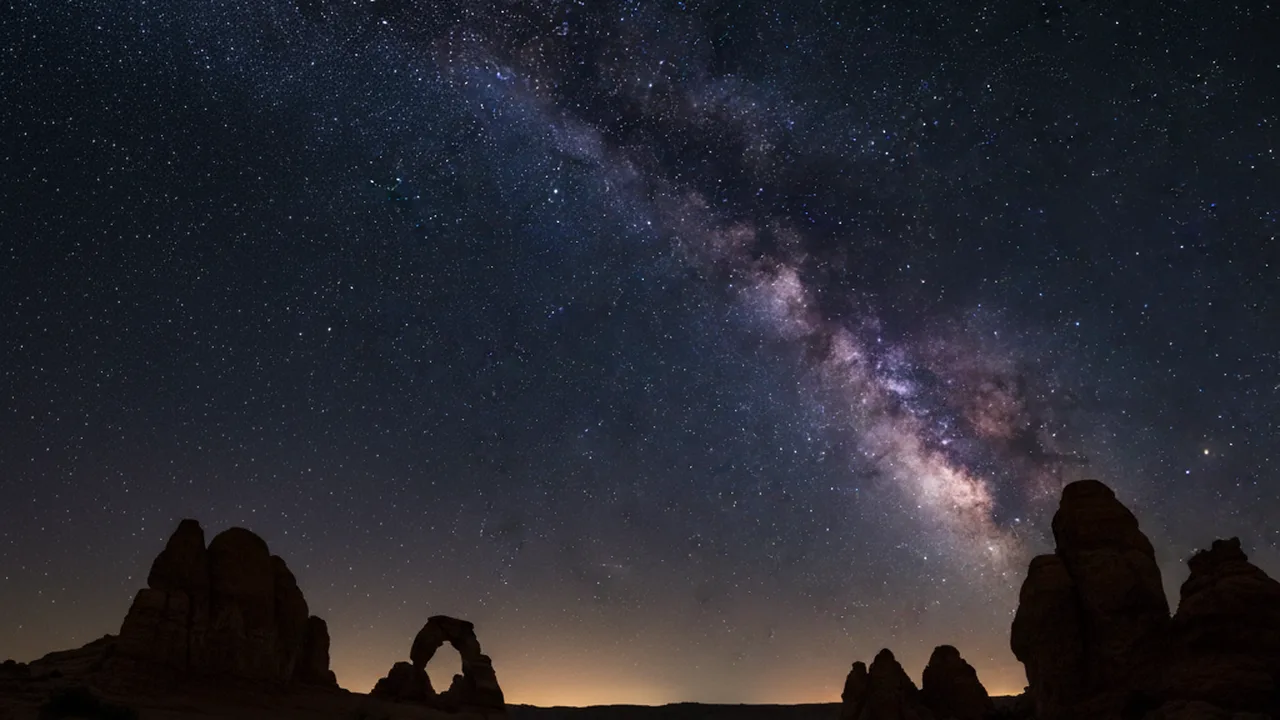
You’re standing in a field at 2 AM, the Milky Way blazing overhead in a way your city-dwelling eyes have never witnessed — and your camera is about to capture it. Milky Way photography is one of the most rewarding skills in the entire photography world, but it demands specific gear, precise settings, and careful planning. This guide covers every step from finding dark skies to nailing focus at infinity, so you walk away with gallery-worthy shots of our galaxy.
Auf einen Blick: You’re standing in a field at 2 AM, the Milky Way blazing overhead in a way your city-dwelling eyes have never witnessed — and your camera is about to capture it. Milky Way photography is one…
Contents
- 1 What Makes Milky Way Photography Different
- 2 Essential Gear for Milky Way Photography
- 3 Planning Your Milky Way Shoot
- 4 Camera Settings for Milky Way Photography
- 5 Composition Tips for Milky Way Shots
- 6 Post-Processing Milky Way Photos
- 7 Common Mistakes to Avoid
- 8 Milky Way Photography Across the Seasons
- 9 Frequently Asked Questions
- 10 Conclusion
What Makes Milky Way Photography Different
Unlike golden hour landscapes or studio portraits, Milky Way photography forces you to work in near-total darkness. Your autofocus won’t lock. Your LCD preview will mislead you. And every second of exposure matters — too long and the stars streak into lines instead of crisp points.
The reward? Images that look like they belong on a NASA feed. The galactic core — that dense, colorful band of gas, dust, and billions of stars — is visible to the naked eye from dark locations, and a modern camera sensor captures far more detail than your eyes ever could.
Essential Gear for Milky Way Photography
Camera Body
Any interchangeable-lens camera with manual mode works, but full-frame sensors excel because their larger photosites gather more light with less noise. The Sony A7 III, Nikon Z6 II, and Canon R6 II are all proven performers. APS-C and Micro Four Thirds cameras can absolutely capture the Milky Way — you’ll just need to push ISO higher or use a faster lens to compensate.
Key specs to look for: strong high-ISO performance (usable images at ISO 3200–6400), a hot shoe for accessories, and ideally a tilting screen so you can compose while the camera points skyward on a tripod.
Lenses
A fast, wide-angle lens is the single most important piece of gear. Wide focal lengths (14–24mm on full frame) capture a sweeping section of the Milky Way, while a large maximum aperture (f/2.8 or faster) pulls in maximum starlight during your limited exposure window.
| Lens | Focal Length | Max Aperture | Best For |
|---|---|---|---|
| Sigma 14mm f/1.8 DG HSM Art | 14mm | f/1.8 | Maximum light gathering, ultra-wide field |
| Samyang/Rokinon 14mm f/2.8 | 14mm | f/2.8 | Budget-friendly, sharp at f/2.8 |
| Sony 20mm f/1.8 G | 20mm | f/1.8 | Sony shooters, compact size |
| Nikon Z 14-24mm f/2.8 S | 14–24mm | f/2.8 | Versatile zoom, takes front filters |
| Canon RF 15-35mm f/2.8 L | 15–35mm | f/2.8 | Canon RF system, weather sealed |
Tripod and Accessories
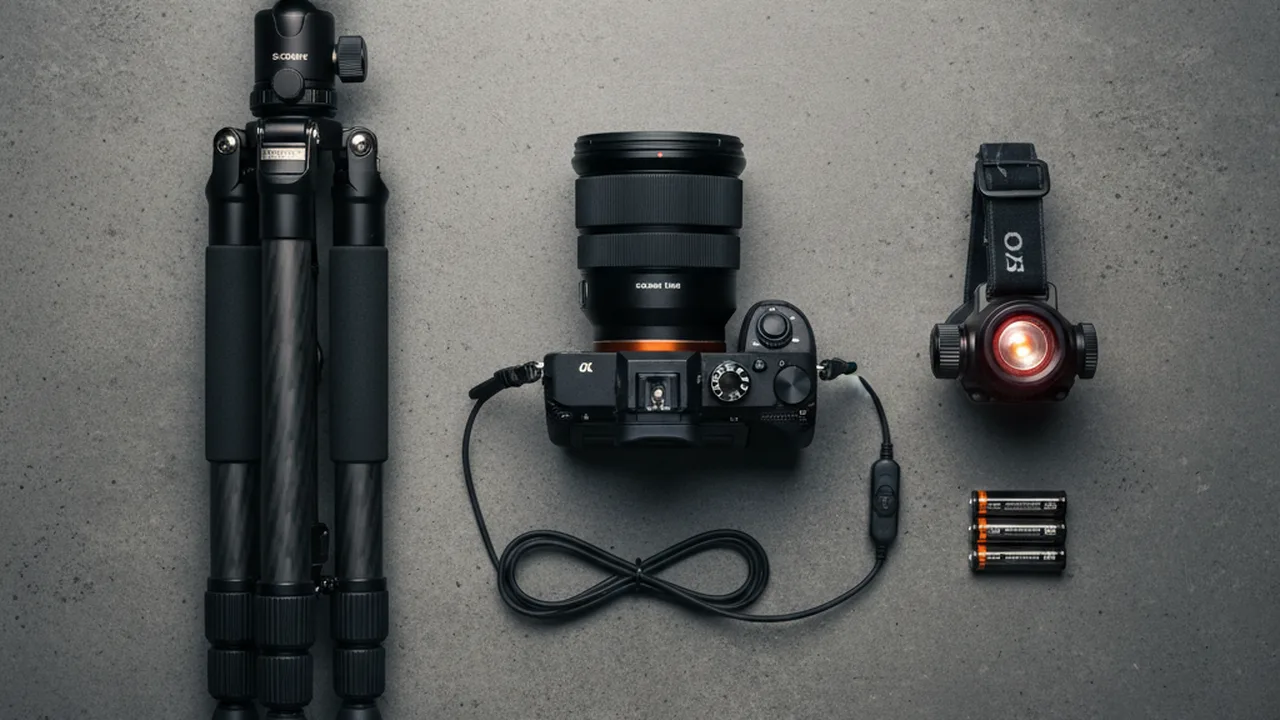
A sturdy tripod is non-negotiable. You’re shooting 15–25 second exposures in the dark, often on uneven terrain. A flimsy travel tripod that vibrates in a breeze will ruin every frame. Carbon fiber models from Benro, Manfrotto, or Peak Design offer the best weight-to-stability ratio.
Other essentials: a headlamp with red-light mode (preserves night vision), a remote shutter release or intervalometer (eliminates camera shake), and extra batteries — cold night air drains lithium-ion batteries 2–3x faster than normal.
Planning Your Milky Way Shoot
Finding Dark Skies
Light pollution is the number one killer of Milky Way photos. Even a small town 20 miles away creates a dome of orange glow that washes out the galactic core. Use lightpollutionmap.info to find Bortle Class 4 or darker locations near you. In the US, national parks like Big Bend, Death Valley, and Cherry Springs State Park are legendary dark-sky destinations.
The rule of thumb: if you can see the Milky Way clearly with your naked eye, your camera will capture something spectacular.
Moon Phase and Timing
Shoot within 5 days of the new moon. A quarter moon or fuller bleaches the sky, drowning out faint galactic detail. Check a moon phase calendar or use PhotoPills — its augmented reality view shows you exactly where and when the Milky Way core will appear above the horizon at your location.
The galactic core (the brightest, most photogenic section) is visible from February through October in the Northern Hemisphere. In February and March, it rises briefly before dawn. By June and July, it’s visible for most of the night. By October, it sets in the early evening.
Weather and Atmospheric Conditions
Clear skies are essential, but not all clear skies are equal. High humidity creates atmospheric haze that softens star detail. The best Milky Way nights have low humidity, no clouds, and stable atmospheric seeing. Websites like ClearDarkSky.com and apps like Astrospheric give hourly forecasts specifically designed for astrophotographers.
Camera Settings for Milky Way Photography
The 500 Rule (and Why NPF Is Better)
The classic 500 Rule calculates maximum shutter speed before stars trail: divide 500 by your focal length. With a 20mm lens, that’s 500 ÷ 20 = 25 seconds. Simple, but it’s a rough approximation from the film era.
The more accurate NPF Rule accounts for sensor pixel density and produces tighter, sharper stars. For a modern 24-megapixel full-frame sensor at 20mm, the NPF rule typically suggests 15–18 seconds rather than 25. PhotoPills has an NPF calculator built in — use it.
| Focal Length | 500 Rule | NPF Rule (24MP FF) | Recommended |
|---|---|---|---|
| 14mm | 35s | 22s | 20–22s |
| 20mm | 25s | 16s | 15–18s |
| 24mm | 21s | 13s | 13–15s |
| 35mm | 14s | 9s | 8–10s |
ISO
Start at ISO 3200 and adjust from there. Most modern full-frame cameras produce clean results at ISO 3200 and usable images at ISO 6400. Higher ISO captures more Milky Way detail in each frame, but also amplifies sensor noise. If your lens opens to f/1.4 or f/1.8, you can often drop to ISO 1600–2000 and still capture a bright galactic core.
Aperture
Shoot wide open or one-third stop down. If your lens is sharpest at f/2.0 rather than f/1.4, use f/2.0 — corner sharpness matters when stars fill the entire frame. Many fast primes show noticeable coma (comet-shaped stars in the corners) at their widest aperture, which improves significantly by stopping down one click.
Focus
Autofocus fails in darkness. Switch to manual focus and use one of these methods:
- Live View magnification: Zoom in 10x on a bright star or distant light, then turn the focus ring until it’s the smallest, sharpest point possible.
- Infinity mark: Focus past infinity on the lens barrel, then back off slightly. The true infinity point varies between lenses.
- Tape it down: Once focused, put a strip of gaffer tape over the focus ring so it doesn’t shift when you adjust other settings.
Composition Tips for Milky Way Shots
A sky full of stars is impressive, but the images that truly stand out include a compelling foreground element. Lone trees, rock formations, abandoned buildings, mountain silhouettes, calm lakes reflecting the stars — these anchor the composition and give the viewer a sense of scale.
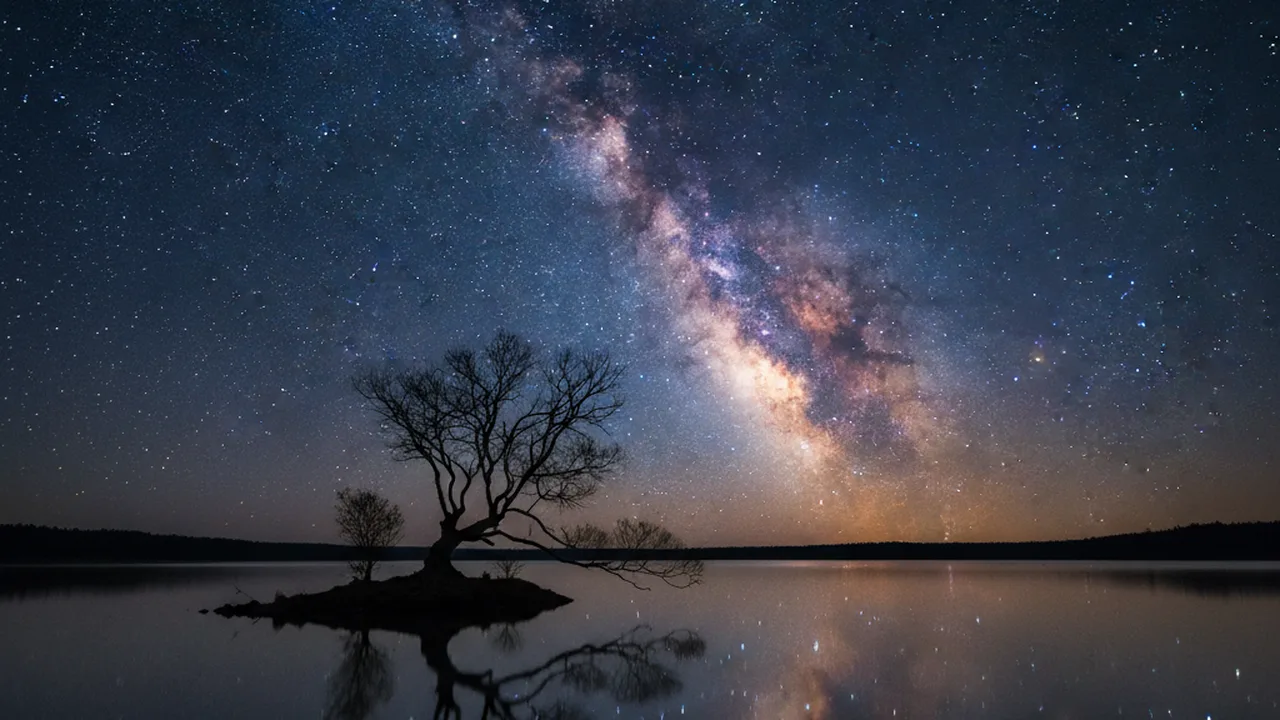
The leading lines principle works beautifully here. A road, fence, or river that draws the eye from the foreground up into the Milky Way core creates a powerful visual flow. Position the galactic core using the rule of thirds — typically in the upper third, with the foreground occupying the lower portion.
Don’t forget to shoot both vertical and horizontal orientations. The Milky Way arc works dramatically in portrait mode, especially when it stretches from one edge of the frame to the other. Panoramic stitches (shooting 6–10 frames and merging in Lightroom) can capture the full arc in one massive image.
Post-Processing Milky Way Photos
RAW Development Basics
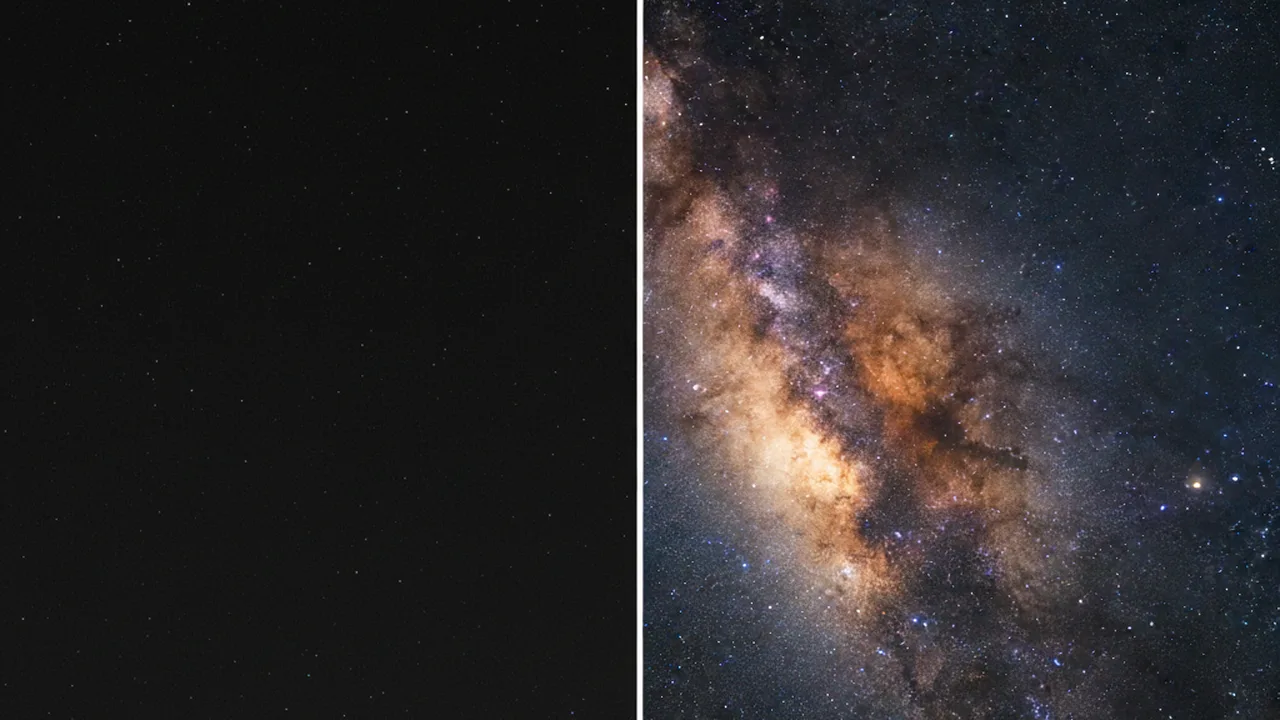
Open your RAW file in Adobe Lightroom, Capture One, or a free alternative like RawTherapee. The out-of-camera image will look flat and dark — that’s normal. Start with these adjustments:
- White balance: 3900–4200K for a natural blue-black sky. Shift slightly warm if you want a golden galactic core.
- Exposure: +0.5 to +1.0 stop to bring up the Milky Way.
- Contrast: +20 to +40 to separate the galactic core from the surrounding sky.
- Highlights: -30 to -60 to recover bright stars that clip.
- Shadows: +40 to +60 to reveal foreground detail.
- Clarity/Texture: +15 to +30 for more defined star structure.
- Noise reduction: Luminance 20–40 depending on ISO. Don’t over-smooth — some grain is natural in astrophotography.
Advanced Techniques: Stacking
Image stacking is the single most effective way to reduce noise without losing detail. Shoot 10–20 identical exposures from the same position, then align and average them in Sequator (free, Windows) or Starry Landscape Stacker (Mac). The math is simple: stacking 16 frames reduces noise by 4x (the square root of 16), giving you results that rival images shot at ISO 200.
For the most ambitious results, shoot separate exposures for the sky and foreground. Process and stack the sky frames, then blend with a single well-exposed foreground shot using luminosity masks in Photoshop. This technique produces clean, detailed images that no single exposure can match.
Common Mistakes to Avoid
Checking your phone. Your phone screen destroys your night vision for 20–30 minutes. Use red-light mode on everything, or better yet, memorize your camera settings before the shoot so you rarely need to look at a screen.
Ignoring the foreground. Pure sky shots get repetitive fast. Every memorable Milky Way photo includes an interesting ground-level subject. Scout your location during daylight hours so you know exactly where to set up when darkness falls.
Over-processing. It’s tempting to crank clarity, vibrance, and saturation to make the galactic core “pop.” Resist. Over-processed Milky Way photos look neon and fake. The best images maintain natural color gradients — soft blues, warm browns, and subtle purples.
Not shooting enough frames. Take at least 20–30 exposures per composition. Some will have airplane trails, satellite streaks, or slight vibration. Having extras gives you clean frames for stacking and editing flexibility.
Forgetting lens fog. When ambient temperature drops below the dew point, moisture condenses on your front element. Carry a lens heater strip (USB-powered, around $20) or keep a microfiber cloth handy to wipe the lens every 15 minutes on humid nights.
Milky Way Photography Across the Seasons
| Season | Core Visibility | Best Shooting Window | Notes |
|---|---|---|---|
| Feb–March | Low on horizon, pre-dawn | 3:00–5:30 AM | First glimpse of the season, cold but clear skies |
| April–May | Rising higher, midnight–dawn | 12:00–4:00 AM | Sweet spot — reasonable hours, galactic core gaining altitude |
| June–July | High in sky, visible most of night | 10:00 PM–3:00 AM | Peak season — longest visibility, warmest conditions |
| Aug–Sept | Shifting west, early evening | 9:00 PM–1:00 AM | Great for evening shoots, core setting earlier each week |
| October | Low on western horizon | 8:00–10:00 PM | Last chance before core disappears for winter |
Looking for the right lens? Check our guide to the best lenses for Sony A7 IV, or browse our best telephoto lenses for Canon roundup.
Frequently Asked Questions
Conclusion
Milky Way photography comes down to three things: getting away from light pollution, using the right settings for your gear, and shooting enough frames to have stacking material. The technical bar is lower than most people think — a crop-sensor camera with a $250 manual-focus lens can produce stunning results from a Bortle 3 location. The real skill is planning: knowing when the core rises, tracking moon phases, and finding compositions that pair the galaxy with striking foreground elements. Pick a new moon weekend, drive to the darkest skies you can reach, and start shooting.
Explore More Photography Guides
Find the perfect gear and techniques for your next shoot.