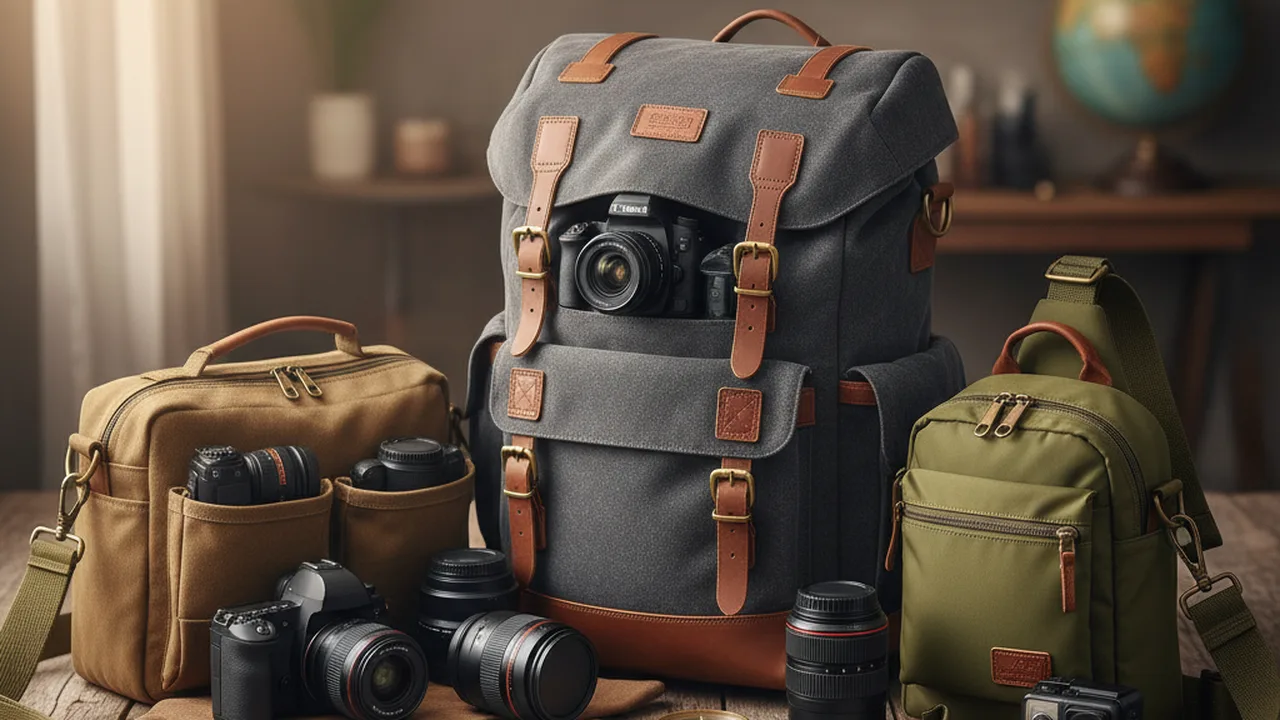
You just landed in Lisbon, grabbed your bag off the carousel, and found your 70-200mm lens rattling around loose because the divider shifted during turbulence. That $2,000 lens now has a scratched front element. A proper camera bag would have prevented this — and the right one actually makes travel photography easier, not just safer.
Auf einen Blick: You just landed in Lisbon, grabbed your bag off the carousel, and found your 70-200mm lens rattling around loose because the divider shifted during turbulence. That $2,000 lens now has a scratched…
After testing dozens of bags across international flights, mountain hikes, and city walks, these are the camera bags that genuinely earn their space in your travel setup for 2026.
• Best overall: Peak Design Everyday Backpack V3 (30L) — versatile, stylish, excellent access
• Best budget: Tarion TB-02 — solid protection under $50
• Best for hiking: Shimoda Explore V2 (30L) — built for trails and summits
• Typical price range: $40–$350 depending on type and capacity
• Most important feature: Side access — grab your camera without removing the bag
What Makes a Camera Bag Good for Travel?
Not every camera bag works for travel. Studio-oriented bags prioritize maximum gear capacity over comfort during a 12-hour travel day. A travel camera bag needs to balance protection, accessibility, comfort, and airline compliance — and ideally look like a normal bag so it doesn’t scream “expensive equipment inside.”
Here’s what separates a genuine travel camera bag from a glorified equipment case:
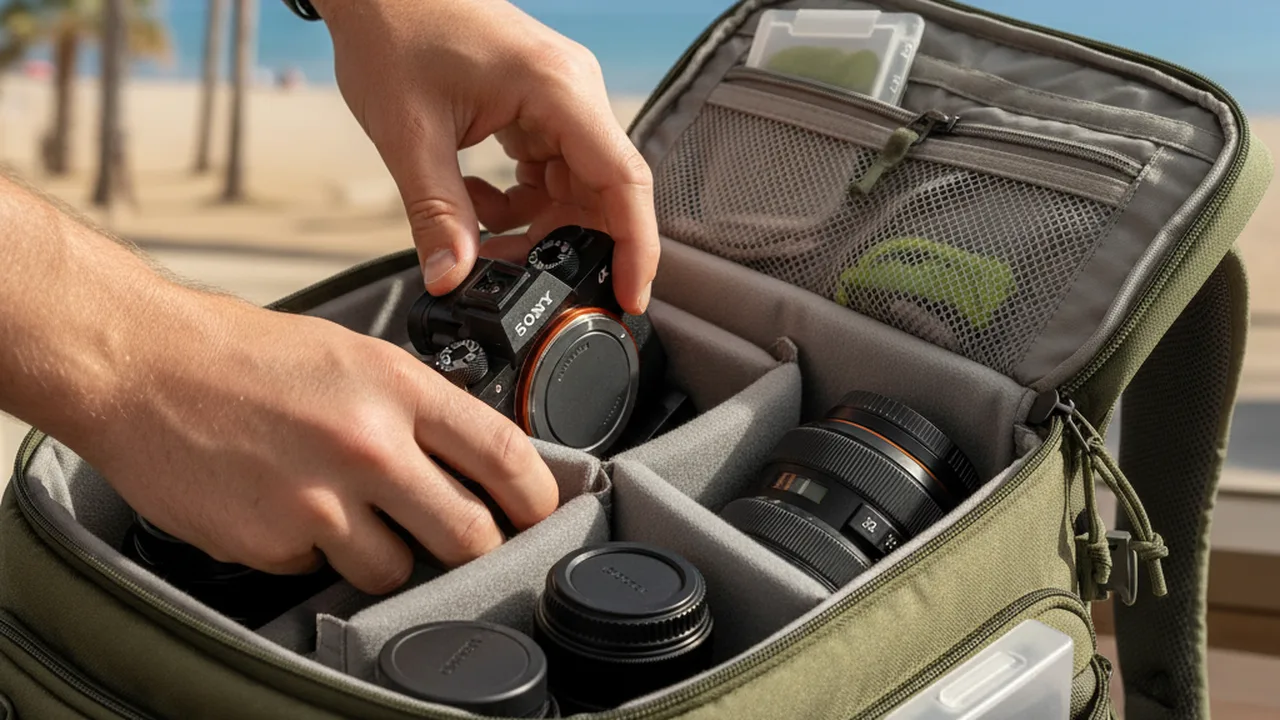
Quick side access is non-negotiable. If you need to swing the bag off both shoulders, unzip the top, dig past a rain jacket and snacks, and then reach your camera — you’ll miss every spontaneous shot. The best travel bags open from the side while still on your back.
Airline carry-on dimensions matter more than total volume. A 45L bag that exceeds 22 × 14 × 9 inches forces a gate check, and checked camera gear is a gamble. The sweet spot sits between 20L and 30L — enough for a body, 2-3 lenses, and personal items.
Weight distribution determines whether you’ll actually carry it all day. Hip belts, sternum straps, and proper back padding transform a heavy kit from painful to manageable during 8-hour walking days.
Best Camera Bags for Travel: Our Top Picks
Peak Design Everyday Backpack V3 (30L) — Best Overall
Peak Design essentially defined the modern camera backpack category, and the V3 continues that dominance. The dual side-access zips let you grab your camera from either side without removing the bag. The FlexFold dividers adapt to whatever combination of gear and personal items you’re carrying — two camera bodies and four lenses one day, one body and a laptop the next.
The 30L version fits under most airline carry-on limits at 20 × 12.5 × 8.5 inches. The external carry straps handle a tripod or jacket without adding bulk. The weatherproof 400D nylon shell shrugs off light rain, and the included rain fly handles downpours.
Where it falls short: the hip belt is an add-on accessory (around $40 extra), and at 4.6 lbs empty, it’s not the lightest option for ultralight travelers. The $300 price tag also stings — but this bag routinely lasts 5+ years of heavy use.
Shimoda Explore V2 (30L) — Best for Adventure & Hiking
If your travel involves trails, not just terminals, Shimoda built this bag for you. Designed by former Lowepro engineers, the Explore V2 features a women’s-specific version with adjusted torso lengths and shoulder strap geometry — a rarity in camera bags.
The removable Core Unit system is brilliant: pull out the camera insert entirely and you’ve got a standard hiking daypack. The back panel opens fully for gear access, the hip belt actually transfers weight properly (not a decorative strap like many competitors), and dedicated hydration sleeve routing keeps a water bladder hose accessible.
At $280 for the bag (Core Units sold separately for $60-$90), the total investment runs higher than competitors. But for photographers who hike 5+ miles to their shots, nothing else matches the carrying comfort and trail-readiness.
Lowepro ProTactic BP 350 AW II — Best Protection
Lowepro has been protecting camera gear since 1967, and the ProTactic line reflects decades of engineering refinement. The ActivZone back panel uses body-mapped padding that channels airflow — critical during summer travel. Four access points (top, side, back, and bottom) mean you’re never fumbling for the wrong zipper.
The “AW” (All Weather) cover deploys from a built-in pocket and wraps the entire bag in seconds. The SlipLock attachment loops on the outside accept compatible accessories like lens pouches and bottle holders, letting you expand capacity without switching bags.
This bag prioritizes protection over style — it looks unmistakably like a camera bag. If discretion matters in your destinations, consider the Peak Design instead. But for pure gear safety in harsh conditions, the ProTactic remains the benchmark at around $180.
Wandrd PRVKE 31 — Best Hybrid (Camera + Travel)
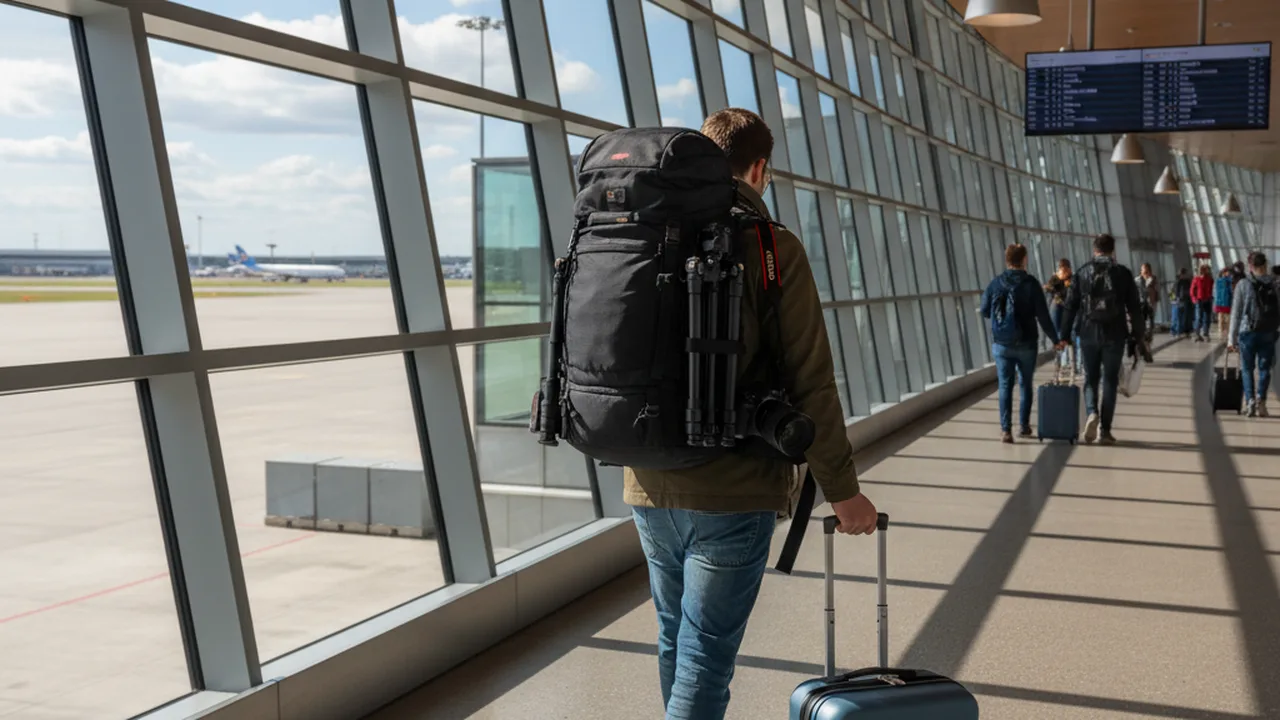
The PRVKE (pronounced “provoke”) solves a common frustration: carrying both camera gear and normal travel items in one bag. The roll-top design expands from 21L to 31L, giving you overflow room for souvenirs, a packable jacket, or extra food on trail days.
A removable camera cube occupies the bottom third, leaving the top section free for non-camera items. The side access panel reaches the camera cube without disturbing the top compartment. A dedicated laptop sleeve fits up to 16 inches, and the magnetic buckle closures are genuinely faster than traditional clips.
The roll-top creates a slightly top-heavy balance when fully expanded, and the camera cube is snugger than dedicated photography bags — fitting one body and 2-3 lenses comfortably, but not much more. At $250, it’s the best option for travelers who don’t want to look like they’re carrying $5,000 in gear.
Think Tank Retrospective 15 V2.0 — Best Shoulder Bag
Not everyone wants a backpack. For city travel where you’re ducking in and out of cafes, museums, and markets, a shoulder bag offers faster access than any backpack design. The Retrospective 15 fits a mirrorless body with 2-3 lenses and looks like a casual messenger bag.
The silent “hook and loop” closure (Think Tank’s proprietary quiet alternative to Velcro) lets you open the bag without announcing yourself to every street subject within earshot. The seam-sealed rain flap and DWR-coated fabric handle light rain, and the interior dividers rearrange in seconds.
Shoulder bags aren’t ideal for all-day carry with heavy kits — that’s just physics. But for a mirrorless setup under 5 lbs of gear, this $130 bag offers the fastest draw speed and most discreet profile of any bag tested.
Tarion TB-02 — Best Budget Option
Under $50, most camera bags sacrifice padding, zippers, or both. The Tarion TB-02 is the exception. Thick foam dividers protect a DSLR or mirrorless body plus 2-3 lenses, the side access panel works smoothly, and the 900D polyester shell resists abrasion better than bags twice the price.
The included rain cover, padded laptop compartment (fits 15 inches), and tripod straps make this a complete travel package at a price point that won’t sting if it gets scuffed or dirty. The zippers aren’t YKK quality and the back padding compresses after heavy use, but for occasional travel photographers or as a backup bag, the value is unbeatable.
Camera Bag Types: Which Style Fits Your Travel?
| Bag Type | Best For | Gear Capacity | Comfort (All Day) | Access Speed |
|---|---|---|---|---|
| Backpack | Full kits, multi-day travel | 1-2 bodies + 3-5 lenses | ★★★★★ | ★★★☆☆ |
| Shoulder/Messenger | City walks, street photography | 1 body + 2-3 lenses | ★★★☆☆ | ★★★★★ |
| Sling | Minimal kits, quick day trips | 1 body + 1-2 lenses | ★★★★☆ | ★★★★★ |
| Rolling Case | Heavy kits, flat terrain | 2-3 bodies + 5-8 lenses | ★★★★☆ | ★★☆☆☆ |
| Insert/Cube | Using any existing bag | 1 body + 1-2 lenses | Varies | ★★★☆☆ |
Backpacks dominate travel photography for good reason — they distribute weight across both shoulders and the hips, making heavy kits manageable. The trade-off is slower access, though side-access panels have largely solved that problem.
Shoulder bags give you the fastest draw speed for street photography and casual shooting, but one-shoulder carry becomes painful after 3-4 hours with a full kit.
Sling bags split the difference — single-strap carry that swings to the front for quick access, but limited capacity suits only minimal kits.
How to Choose the Right Camera Travel Bag
Match the Bag to Your Kit Size
The most common mistake: buying a bag that’s too large. An oversized bag lets gear shift during transit, increasing impact risk. Your bag should fit your actual travel kit snugly, with minimal empty space when fully packed.
Traveling with a mirrorless body, two lenses, and accessories? A 15-20L bag handles that perfectly. Carrying two bodies, four lenses, a flash, and a laptop? You need 25-30L minimum.
Prioritize Access Style Over Capacity
A 40L top-loading backpack holds more gear than a 25L side-access bag. But if you spend 30 seconds accessing your camera each time — and miss shots because of it — that extra capacity costs you the photos that justified bringing the gear in the first place.
Side access, back-panel access, and quick-grab shoulder bags all serve different shooting styles. Think about how you actually shoot: do you keep one lens on all day, or swap frequently? Do you shoot from a stationary position, or while walking?
Check Airline Compatibility
Most airlines enforce carry-on limits around 22 × 14 × 9 inches (56 × 36 × 23 cm). Budget carriers like Ryanair and Spirit measure more strictly. Every bag recommended above fits standard carry-on dimensions — but always verify with your specific airline before traveling.
What to Pack in Your Camera Travel Bag
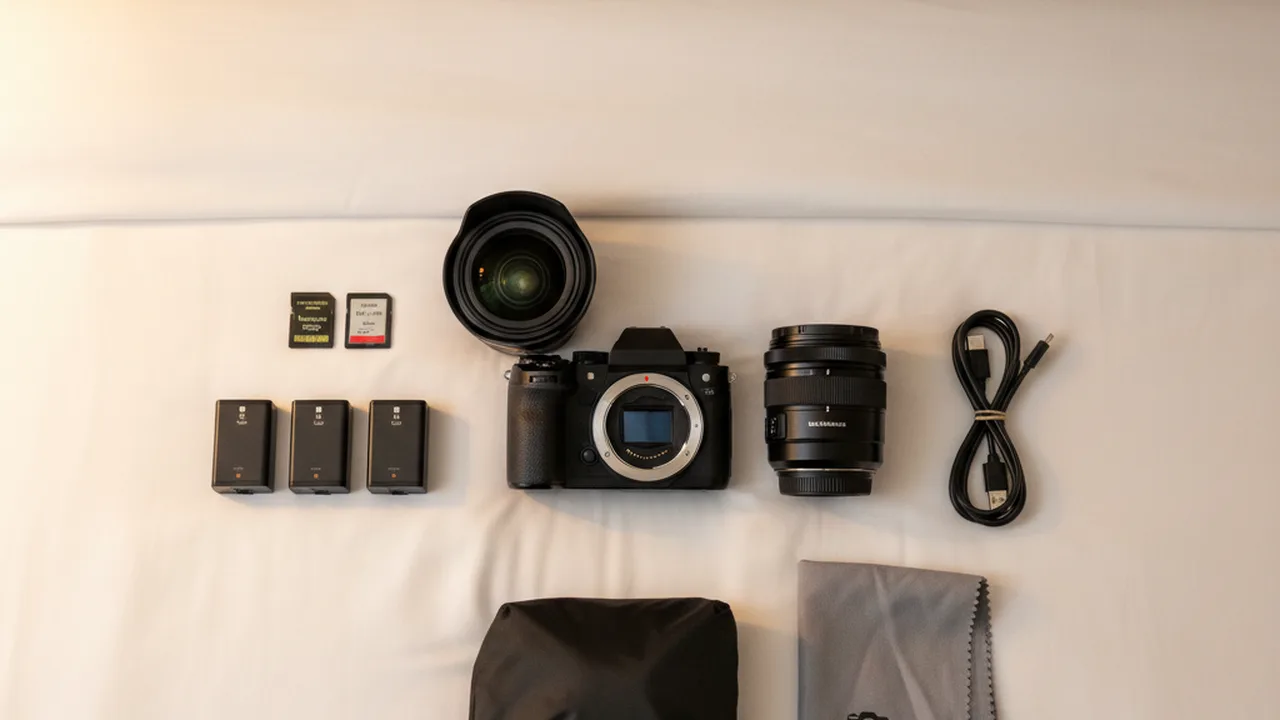
Packing efficiently matters as much as choosing the right bag. Here’s a practical packing list based on thousands of miles of travel photography:
Essential gear:
- Camera body (one is usually enough for travel)
- Wide-angle zoom (16-35mm or equivalent) — landscapes, architecture, interiors
- Standard zoom (24-70mm or equivalent) — the workhorse for most travel situations
- Spare battery (minimum two total) and charger
- Two memory cards (never put all your shots on one card)
- Lens cleaning cloth and blower
Situation-dependent additions:
- Telephoto zoom (70-200mm) — wildlife, compressed landscapes, distant subjects
- Fast prime (35mm or 50mm f/1.8) — low light, street photography, portraits
- Compact tripod or GorillaPod — long exposures and self-portraits
- ND filter set — waterfalls, smooth water, astrophotography
- Rain cover or dry bag for tropical destinations
Skip these to save weight: flash units (use natural light), multiple camera bodies (unless shooting professionally), full-size tripods (compact alternatives exist), and lens filters you haven’t used in the past 6 months.
Camera Bag Care and Travel Tips
Your bag protects your gear, but the bag itself needs some attention to last:
Before every trip: Check all zippers for smooth operation. A stuck zipper mid-trip means fumbling for your camera when it matters most. Apply zipper lubricant (paraffin wax or silicone spray) if anything catches.
During transit: Keep your camera bag as your personal item, not in the overhead bin where other passengers’ luggage can crush it. Place lens caps on every lens, including the one mounted on your body. Remove batteries from flash units to prevent accidental discharge.
In humid destinations: Drop a few silica gel packets inside the bag to prevent moisture damage. After beach days, wipe the exterior with a damp cloth to remove salt spray before it corrodes zippers. A weather-sealed camera body paired with a weather-resistant bag creates a reliable all-conditions setup.
After trips: Empty the bag completely, vacuum crumbs and debris from divider Velcro, and air it out overnight. Store the bag with dividers loosely positioned — compressed foam loses its cushioning ability over time.
Price Comparison: Best Camera Bags for Travel 2026
| Bag | Type | Capacity | Weight | Price Range |
|---|---|---|---|---|
| Peak Design Everyday V3 30L | Backpack | 30L | 4.6 lbs | $290–$310 |
| Shimoda Explore V2 30L | Backpack | 30L | 4.2 lbs | $280–$370* |
| Lowepro ProTactic 350 AW II | Backpack | 16L | 3.7 lbs | $170–$200 |
| Wandrd PRVKE 31 | Roll-top Backpack | 21–31L | 4.0 lbs | $240–$260 |
| Think Tank Retrospective 15 | Shoulder Bag | ~10L | 1.7 lbs | $120–$140 |
| Tarion TB-02 | Backpack | ~20L | 2.4 lbs | $40–$50 |
*Shimoda Explore V2 price includes Core Unit; bag alone is $280.
Frequently Asked Questions
Final Verdict
For most travel photographers, the Peak Design Everyday Backpack V3 (30L) offers the best combination of access, protection, style, and versatility. It works equally well in airports, city streets, and light trails.
Adventure photographers who prioritize hiking comfort should go with the Shimoda Explore V2 — its load-bearing design and removable Core Unit system are unmatched on trails.
And if you’re on a tight budget or just starting out, the Tarion TB-02 proves you don’t need to spend $300 to keep your gear safe. It won’t last a decade of heavy use, but it’ll protect your equipment through years of travel while you figure out exactly what you need from a long-term bag.
Whatever you choose, the right camera bag doesn’t just protect your gear — it removes friction between you and the photos you traveled to capture. Match the bag to your shooting style, pack only what you’ll actually use, and spend your energy on composition instead of fumbling with zippers.
From portrait lenses to beginner cameras, find expert-tested recommendations for every shooting style.
Explore More Photography Guides
Find the perfect gear and techniques for your next shoot.