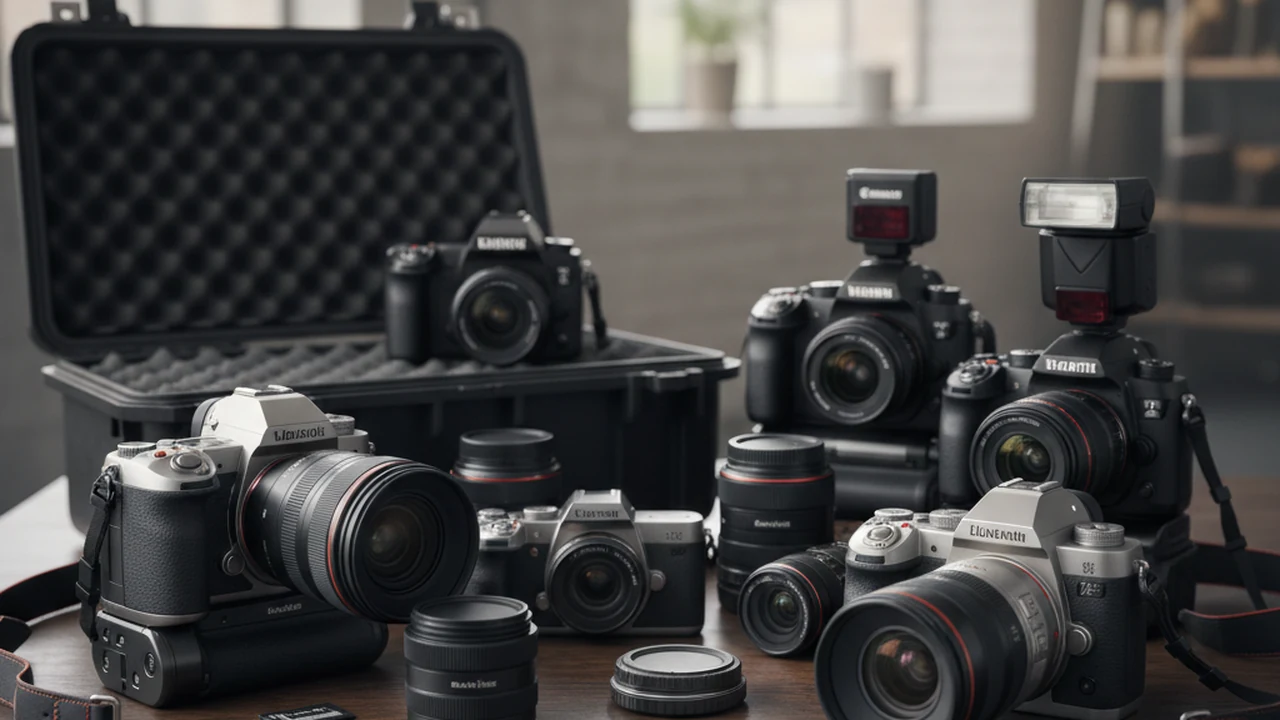
Quick answer: The Fujifilm X-T5 takes Fujifilm X-mount lenses. For one everyday lens, compare the XF16–80mmF4 R OIS WR for reach with the Tamron 17–70mm F/2.8 Di III-A VC RXD for a brighter constant aperture. The Fujifilm XF16–55mmF2.8 R LM WR II is a shorter, lighter second-generation premium zoom. A prime or telephoto makes sense only after you know which focal lengths your current lens cannot cover.
Our method: This guide compares manufacturer specifications, focal-length coverage, stabilization, carry weight and the jobs each lens can do on an X-T5. We did not personally test these lenses or run optical lab measurements. The recommendations do not depend on numerical sharpness scores or autofocus times that we cannot substantiate. Product versions and retailer mounts can be easy to confuse, so verify the exact model before buying.
Affiliate disclosure: Some Amazon links below are affiliate links. Photography Discover may earn a commission from qualifying purchases at no extra cost to you.
What matters on the X-T5
The X-T5 has a 40.2-megapixel APS-C sensor and in-body image stabilization (IBIS), according to Fujifilm. All seven lenses below are available in X-mount, but their roles differ. A 16mm lens frames like roughly 24mm on full frame; a 300mm lens frames like roughly 450mm. Those equivalents compare angle of view, not actual focal length or aperture. Our field of view calculator can help you compare framing.
IBIS and in-lens OIS or VC help with camera shake. They cannot freeze a moving child, bird or athlete; shutter speed still matters. “WR” means a lens is designed for weather resistance, not that it is waterproof. A weather-resistant body and lens are still not a reason to expose gear to avoidable water or grit.
Seven lenses to compare
- All-purpose reach: Fujifilm XF16–80mmF4 R OIS WR.
- Brighter long-range standard zoom: Tamron 17–70mm F/2.8 Di III-A VC RXD for Fujifilm X.
- Premium f/2.8 standard zoom: Fujifilm XF16–55mmF2.8 R LM WR II.
- Small street prime: Fujifilm XF23mmF2 R WR.
- Bright normal prime: Fujifilm XF33mmF1.4 R LM WR.
- Travel telephoto: Fujifilm XF70–300mmF4–5.6 R LM OIS WR.
- True macro: Fujifilm XF80mmF2.8 R LM OIS WR Macro.
Fujifilm XF16–80mmF4 R OIS WR: one-lens travel range
The 16–80mm range gives roughly a 24–122mm full-frame field of view, from broad scenes to tighter portraits. Fujifilm lists a constant f/4 aperture, optical image stabilization and a 440g weight. This is the sensible starting point when range and carrying one lens matter more than an f/2.8 maximum aperture. Its f/4 opening gathers less light than f/2.8 at the same shutter speed and ISO, so the brighter zooms below are more flexible for moving subjects indoors. OIS is useful for handholding static scenes, but it does not eliminate motion blur from the subject. Check Fujifilm’s product details.
Check the XF16–80mm X-mount listing on Amazon.
Tamron 17–70mm F/2.8 Di III-A VC RXD: longer f/2.8 zoom
Tamron’s 17–70mm covers about a 25.5–105mm full-frame field of view and keeps f/2.8 throughout the zoom range. The Fujifilm X version has VC optical stabilization and weighs 530g, according to Tamron. Compared with the XF16–80mm, it gives up 1mm at the wide end and 10mm at the long end, but gains one stop of maximum aperture. Compared with Fujifilm’s XF16–55mm II, it reaches farther and includes VC, though it is heavier on the published figures. Tamron sells the same lens family in several mounts; choose the Fujifilm X / B070X listing. Check Tamron’s specifications.
Check the Tamron 17–70mm Fujifilm X listing on Amazon.
Fujifilm’s second-generation XF16–55mm II offers a constant f/2.8 aperture and a 16–55mm range, equivalent to about 24–84mm in full-frame framing. Fujifilm lists 410g, a 72mm filter and a 0.3m minimum focus distance. It begins wider than the Tamron 17–70mm and is lighter on paper, but its long end is shorter. This is a strong fit when you want a brighter native standard zoom without carrying the first-generation model’s extra weight. It does not claim optical stabilization in its model name; the X-T5’s IBIS remains relevant for static subjects. Check the listing for “II”: the original XF16–55mmF2.8 R LM WR is a different, heavier lens. Check Fujifilm’s product details.
Fujifilm XF23mmF2 R WR: small street and travel prime
A 23mm lens gives the X-T5 a roughly 35mm full-frame field of view: wide enough to show a person in context without the stretching of a much wider lens near the edge. Fujifilm lists this XF23mm at 180g with an f/2 maximum aperture. It is an appealing way to make the camera smaller for walks, documentary images and travel. You lose zoom flexibility, and f/2 is not as bright as Fujifilm’s larger f/1.4 primes. If you frequently crop because 23mm is too wide, consider the 33mm option below. Check Fujifilm’s specifications.
Fujifilm XF33mmF1.4 R LM WR: normal-view low-light prime
Fujifilm lists the XF33mmF1.4 at a 50mm-equivalent field of view, 360g and an f/1.4 maximum aperture. It is a more natural fit than a wide prime when you photograph one person, everyday details or dim interiors and can move to frame the scene. The wider aperture gives more light and shallower depth of field than an f/2 or f/2.8 lens at the same focal length. The trade-off is a heavier prime with a narrower view than 23mm; an f/1.4 setting also demands careful focus when the subject is close. Check Fujifilm’s specifications.
Fujifilm XF70–300mmF4–5.6 R LM OIS WR: reach for distant subjects
The XF70–300mm spans a roughly 107–457mm full-frame field of view. Fujifilm lists OIS and a 580g weight. It is a practical second lens for outdoor sports, larger wildlife and compressed landscape details when a standard zoom cannot reach. Its f/4–5.6 maximum aperture is slower than a dedicated f/2.8 telephoto, and 300mm may still be short for very small or distant birds. Start by estimating your subject distance and how much cropping you can accept; see our wildlife camera guide for the body side of that decision. Check Fujifilm’s specifications.
Fujifilm XF80mmF2.8 R LM OIS WR Macro: life-size close-ups
The XF80mm Macro is the specialist in this group. Fujifilm lists 1:1 maximum magnification, so a subject can be recorded at life size on the sensor, along with OIS and a weight of about 750g. Choose it for insects, flowers, small objects and controlled detail work if your standard zoom does not focus close enough. Its roughly 122mm-equivalent framing can also serve close portraits, but it is large for an everyday walkaround lens. At macro distances, depth of field becomes thin and stabilization cannot stop a moving subject. Check Fujifilm’s product details.
Which standard zoom should you buy?
Pick the XF16–80mmF4 if you want the widest range of the three in one lens and often shoot in daylight. Its 16mm start and 80mm end are useful for travel, and it includes OIS.
Pick the Tamron 17–70mmF2.8 if you want a constant f/2.8 aperture, a 70mm long end and VC. Confirm that the seller is offering the Fujifilm X version, not Sony E or another mount.
Pick the XF16–55mmF2.8 II if you want Fujifilm’s newer native f/2.8 zoom, prefer its 16mm wide end and accept the shorter 55mm reach. Check for “II” in the exact model name. These are recommendations from published specifications and framing needs, not a laboratory ranking of image quality.
Before ordering
- Confirm Fujifilm X-mount and the exact model generation on the retailer page. An APS-C lens with the same name may also be sold for Sony E or another mount.
- Look at your existing photos’ focal lengths. If most are at one end of your current zoom, buy for that missing angle rather than a generic “best lens” badge.
- Decide whether f/2.8 or f/1.4 is needed for moving people in low light. Stabilization helps camera shake, not subject movement.
- Check manufacturer compatibility and firmware notes for third-party lenses, plus warranty and return terms for the exact country and seller.
- Recheck the live price and bundle contents. This guide does not use fixed prices because they change.
Frequently asked questions
Can a Sony E-mount Sigma or Tamron lens fit the Fujifilm X-T5?
No. A lens family may exist for both mounts, but the physical mount versions are different. Order the listing that explicitly says Fujifilm X.
Does the X-T5’s IBIS mean I do not need a stabilized lens?
IBIS can reduce camera shake with compatible lenses. In-lens stabilization may still be useful, especially at longer focal lengths, but the result depends on the exact lens, camera settings and technique. Neither kind of stabilization freezes a moving subject.
Should I replace my kit lens immediately?
Keep it until you can name a specific limitation: focal length, light gathering, close focus, size or handling. A prime, telephoto or macro lens often adds a genuinely new capability; a second standard zoom may mostly overlap what you already own.
Sources reviewed September 2026: the linked Fujifilm and Tamron product pages and specifications. Model names, mount versions, availability and firmware support can change; confirm these details on the manufacturer and seller pages before purchase.