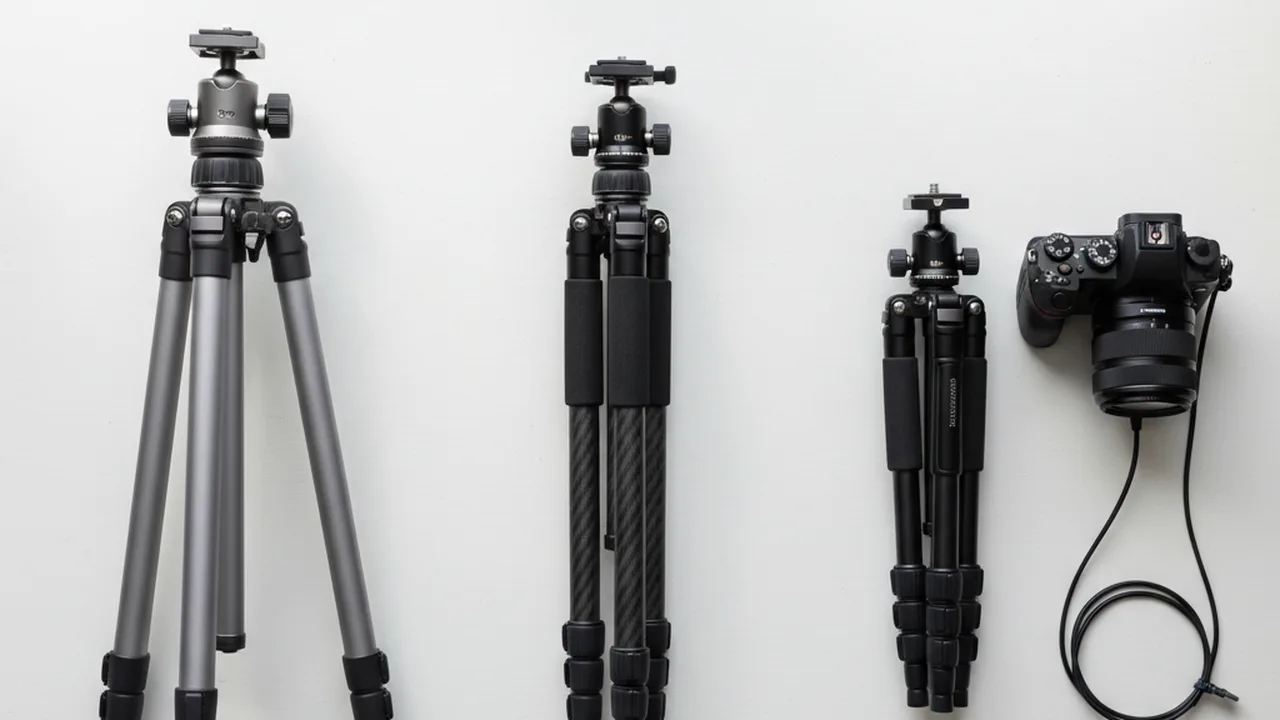
A sharp long-exposure shot of a waterfall or a perfectly composed night sky photograph — neither happens handheld. You need a tripod, but spending $500 on carbon fiber legs when you’re still building your kit makes zero sense. The good news: several tripods under $100 now deliver stability, portability, and build quality that would have cost three times as much five years ago.
At a Glance: A sharp long-exposure shot of a waterfall or a perfectly composed night sky photograph — neither happens handheld. You need a tripod, but spending $500 on carbon fiber legs when you’re still…
After comparing dozens of budget tripods across load capacity, weight, folded length, and real-world usability, these seven models stand out as the best options for photographers and videographers who want reliable support without emptying their wallet.
• Best overall under $100: K&F Concept 62″ Aluminum — lightweight, converts to monopod
• Best for travel: SmallRig AP-02 — 63″ reach, folds to 16.5″
• Best for heavy setups: NEEWER 77″ Monopod/Tripod — 18 lb load capacity
• Material matters: aluminum tripods average 3–4 lbs, carbon fiber 2–3 lbs but costs more
• Always check load capacity: your camera + heaviest lens + head weight combined
Contents
- 1 What Makes a Tripod Worth Buying Under $100?
- 2 The 7 Best Tripods Under $100 for 2026
- 2.1 1. K&F Concept 62″ Aluminum Tripod — Best Overall
- 2.2 2. NEEWER 77″ Camera Tripod/Monopod — Best for Heavy Setups
- 2.3 3. SmallRig AP-02 Lightweight Travel Tripod — Best for Travel
- 2.4 4. JOBY GorillaPod 3K — Best for Creative Angles
- 2.5 5. NEEWER 66″ Carbon Fiber Tripod — Best Budget Carbon Fiber
- 2.6 6. UBeesize 67″ Camera Tripod — Best Budget-Friendly Pick
- 2.7 7. Manfrotto Befree Advanced — Premium Pick (Just Over $100)
- 3 Tripod Comparison Table
- 4 How to Choose the Right Budget Tripod for Your Needs
- 5 Common Mistakes When Buying a Cheap Tripod
- 6 Aluminum vs. Carbon Fiber: Is It Worth the Extra Cost?
- 7 FAQ: Tripods Under $100
- 8 Final Verdict: Which Tripod Should You Buy?
What Makes a Tripod Worth Buying Under $100?
Price alone tells you nothing about tripod quality. A $30 tripod from a gas station and a $90 tripod from a camera brand serve completely different purposes. The difference comes down to four factors: load capacity, stability under wind, locking mechanism quality, and folded portability.
Load capacity is the single most important spec. Calculate your heaviest camera-lens combination, then add 50% as a safety margin. If your mirrorless body and telephoto lens weigh 4 lbs together, you want at least 6 lbs of rated capacity. Cheap tripods often overstate this number, so reading user reviews for real-world performance matters.
Twist locks vs. flip locks is largely personal preference. Twist locks (like those on K&F Concept models) look cleaner and are less likely to snag on bags. Flip locks (like Neewer and UBeesize use) are faster to deploy — one flick and the leg extends. Both work fine under $100.
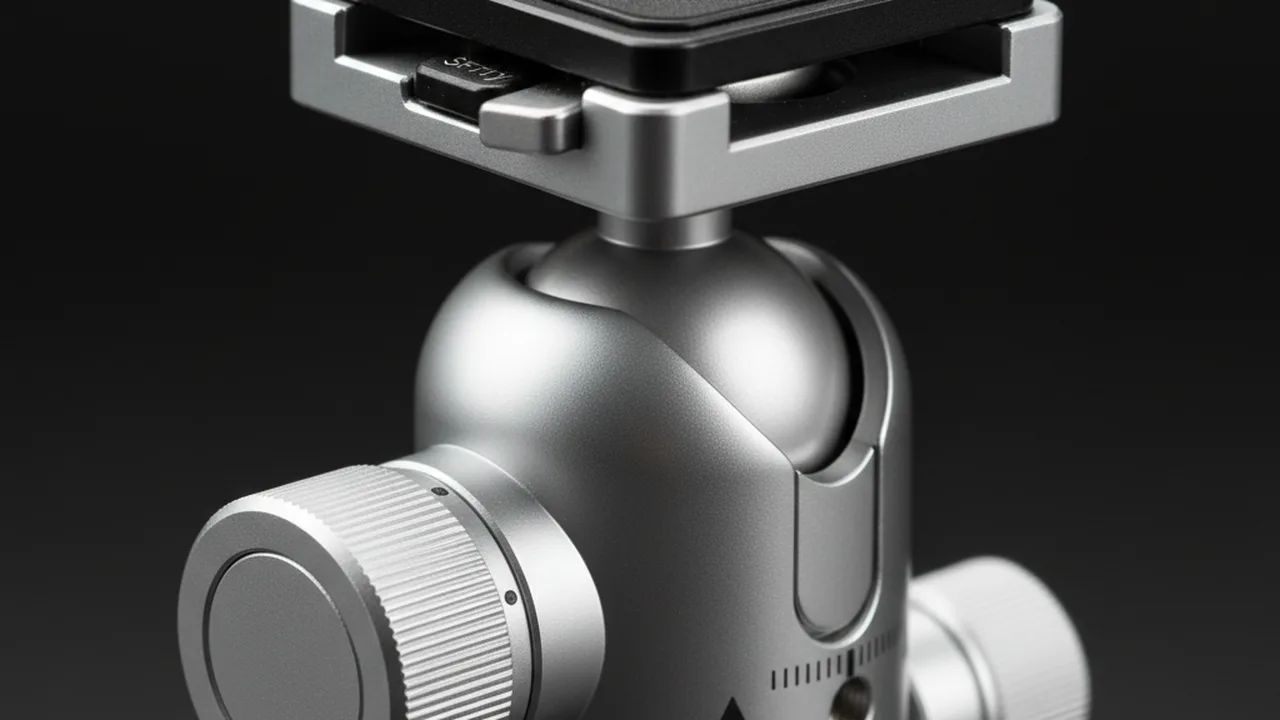
The ball head is where budget tripods cut the most corners. Look for an Arca-Swiss compatible head, which lets you swap plates with most L-brackets and quick-release systems. Several models on this list include decent ball heads; others come with pan-tilt heads better suited to video.
The 7 Best Tripods Under $100 for 2026
1. K&F Concept 62″ Aluminum Tripod — Best Overall
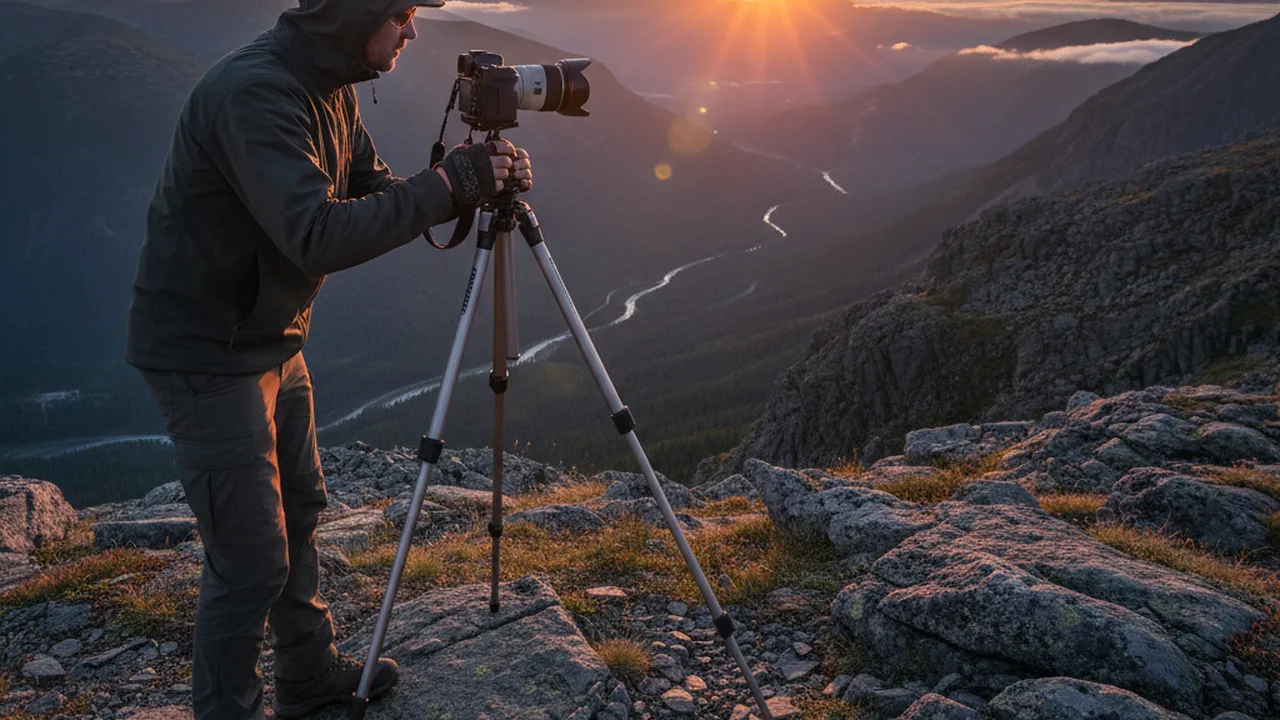
The K&F Concept 62″ aluminum tripod hits a sweet spot that’s hard to beat at this price. It extends to 62 inches (157 cm), weighs just 3.1 lbs, and supports up to 17.6 lbs — enough for a full-frame mirrorless body with a 70-200mm lens attached. The center column detaches to become a monopod, which is genuinely useful for wildlife photography where you need quick panning.
The 360° panoramic ball head uses an Arca-Swiss compatible quick-release plate, so you won’t be locked into a proprietary system. Leg angle adjustments offer three positions, and the twist-lock mechanism feels solid without being overly stiff. Folded down, it measures 16.5 inches — compact enough for a carry-on suitcase.
Best for: All-around photography, landscapes, portraits on a tripod, beginners who want one tripod that does everything.
2. NEEWER 77″ Camera Tripod/Monopod — Best for Heavy Setups
If you shoot with a DSLR and heavy glass — or you’re tall and tired of hunching — the NEEWER 77″ solves both problems. At full extension it reaches 6 feet 5 inches, and the aluminum alloy construction supports up to 18 lbs. That’s enough for a Canon R5 with a 100-500mm telephoto, or a Sony A7 IV with a battery grip and 70-200mm f/2.8.
The convertible design lets you unscrew one leg section and attach it to the center column for a functional monopod. The included pan-tilt head has separate controls for pan, tilt, and lock — better for video work than a ball head. At 4.2 lbs, it’s not the lightest option here, but the trade-off for maximum height and load capacity is worth it for studio or location work.
Best for: Tall photographers, heavy camera/lens combos, videographers who need a pan-tilt head.
3. SmallRig AP-02 Lightweight Travel Tripod — Best for Travel
SmallRig built its reputation on camera cages and accessories, and the AP-02 shows they understand what traveling photographers actually need. At 2.8 lbs with a folded length of 16.5 inches, it disappears into a backpack side pocket. Despite the compact size, it extends to 63 inches and handles up to 11 lbs.
What sets it apart from other travel tripods in this range is the unconventional center column design that allows low-angle shooting down to about 5 inches off the ground — useful for macro work or creative compositions. The included ball head is surprisingly smooth for a sub-$100 tripod, and it uses the universal Arca-Swiss plate system.
Best for: Travel photographers, backpackers, anyone who prioritizes weight savings without sacrificing stability.
4. JOBY GorillaPod 3K — Best for Creative Angles
The GorillaPod isn’t a traditional tripod — it’s a flexible-leg system that wraps around tree branches, fence posts, railings, or anything you can find. This makes it invaluable for street photography, travel vlogging, and situations where setting up a full tripod isn’t practical or allowed.
The 3K version supports up to 6.6 lbs, which covers most mirrorless bodies with a standard zoom lens. The included BallHead 3K offers 360° panning and a bubble level. Standing on a flat surface, it reaches about 12 inches — obviously not for landscape work, but that’s not the point. The GorillaPod fills a gap that no conventional tripod can.
At roughly 12 oz, you can throw it in a jacket pocket. Many photographers own a GorillaPod alongside a traditional tripod — it’s that versatile as a secondary support system.
Best for: Vloggers, street photographers, creative angles, travel as a secondary support.
5. NEEWER 66″ Carbon Fiber Tripod — Best Budget Carbon Fiber
Carbon fiber under $100 exists — and the NEEWER 66″ delivers on the promise. Carbon fiber dampens vibrations faster than aluminum, which means sharper images at slower shutter speeds (think 1/15s to 2 seconds). At 2.5 lbs, it’s noticeably lighter than aluminum alternatives of similar height.
The 66-inch maximum height works for most photographers, and the 8-section leg design folds down to a backpack-friendly 18 inches. Load capacity tops out at 26.5 lbs — more than enough for any sub-$5,000 camera setup. The twist locks feel precise, and the included ball head is adequate for general use, though serious landscape photographers may want to upgrade the head later.
Best for: Photographers who want carbon fiber performance on an aluminum budget, astrophotography where vibration damping matters.
6. UBeesize 67″ Camera Tripod — Best Budget-Friendly Pick
At roughly $25–35, the UBeesize 67″ is the entry point that actually works. It won’t compete with $80–100 tripods on build quality, but for beginners testing whether they even need a tripod, it’s a low-risk entry. The aluminum legs extend to 67 inches, support up to 11 lbs, and fold to 21 inches with the included travel bag.
The phone holder and Bluetooth remote are bonuses that content creators will appreciate — set up the tripod, pair the remote, and shoot self-portraits or real estate walkthroughs hands-free. The flip-lock legs deploy quickly, and the pan-tilt head handles basic video panning. For beginners just getting started, this tripod removes the cost barrier entirely.
Best for: Absolute beginners, content creators who also shoot with phones, anyone testing whether they need a tripod before investing more.
7. Manfrotto Befree Advanced — Premium Pick (Just Over $100)
At around $140–150, the Manfrotto Befree Advanced sits above our $100 budget — but it’s worth mentioning as the upgrade path. This is what you get when you spend roughly 50% more. The build quality jump is immediately noticeable — the lever-lock system is smoother, the ball head has finer adjustment, and the Italian design heritage shows in every detail.
At 3.6 lbs with a 60″ maximum height and 15.75 lb load capacity, it competes directly with tripods costing $200+. The folded length of 16 inches makes it genuinely travel-friendly. If your budget has any flexibility, the Befree Advanced is the tripod you’ll keep for a decade.
Best for: Photographers ready to invest slightly more for significantly better build quality and longevity.
Tripod Comparison Table
| Tripod | Max Height | Weight | Load Capacity | Folded Length | Material |
|---|---|---|---|---|---|
| K&F Concept 62″ | 62″ | 3.1 lbs | 17.6 lbs | 16.5″ | Aluminum |
| NEEWER 77″ | 77″ | 4.2 lbs | 18 lbs | 22″ | Aluminum |
| SmallRig AP-02 | 63″ | 2.8 lbs | 11 lbs | 16.5″ | Aluminum |
| JOBY GorillaPod 3K | 12.5″ | 0.75 lbs | 6.6 lbs | 12.5″ | ABS/Steel |
| NEEWER 66″ CF | 66″ | 2.5 lbs | 26.5 lbs | 18″ | Carbon Fiber |
| UBeesize 67″ | 67″ | 3.0 lbs | 11 lbs | 21″ | Aluminum |
| Manfrotto Befree Adv. | 60″ | 3.6 lbs | 15.75 lbs | 16″ | Aluminum |
How to Choose the Right Budget Tripod for Your Needs
With seven solid options on the table, narrowing down your choice depends on how you actually shoot. Here’s a decision framework based on common photography styles:
Landscape and long exposure: Stability and vibration damping matter most. The NEEWER 66″ carbon fiber is the top pick here — carbon fiber settles faster after you press the shutter, which means sharper results during long exposures with ND filters. The K&F Concept 62″ is a close second if you want to stay under $50.
Travel and hiking: Weight and folded size are the priority. The SmallRig AP-02 at 2.8 lbs and 16.5″ folded is purpose-built for this. The JOBY GorillaPod 3K works as an ultralight backup at just 12 oz.
Video work: You need a pan-tilt head (not a ball head) for smooth panning. The NEEWER 77″ comes with one out of the box. The UBeesize 67″ also includes a pan-tilt head at a lower price point.
Studio and controlled environments: Maximum height and load capacity take priority over portability. The NEEWER 77″ at 6’5″ handles heavy studio setups without breaking a sweat.
Common Mistakes When Buying a Cheap Tripod
Ignoring the head weight in load calculations. A ball head typically weighs 0.5–1 lb. When a tripod is rated for 10 lbs, that includes the head. Your actual camera capacity might be 9–9.5 lbs. This matters when you’re using heavy telephoto lenses.
Buying the cheapest option “just to try.” A $15 Amazon tripod with plastic joints will wobble, frustrate you, and end up in a closet. The UBeesize at ~$30 is the actual minimum viable tripod — below that, you’re wasting money.
Forgetting about wind. Lightweight tripods need a center column hook. Hang your camera bag from it to add weight and stability in windy conditions. Most tripods on this list include a hook — check before buying if you shoot outdoors regularly.
Overlooking the quick-release plate system. Proprietary plates lock you into one brand. Arca-Swiss compatible plates (used by K&F Concept, SmallRig, and NEEWER carbon fiber) work with hundreds of accessories and L-brackets. This matters more than you think when you start adding gear.
Aluminum vs. Carbon Fiber: Is It Worth the Extra Cost?
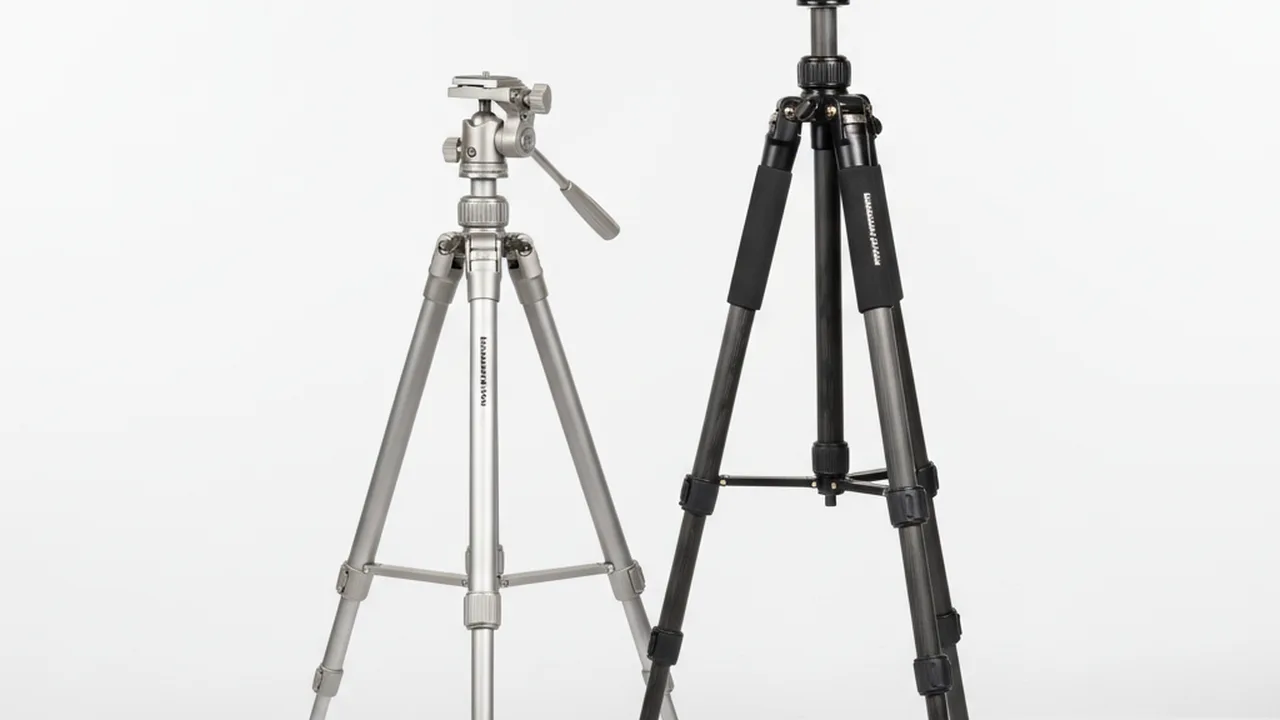
Under $100, you’ll mostly find aluminum tripods. Carbon fiber options exist (like the NEEWER 66″ on this list), but they typically sacrifice features like included heads or maximum height to hit the price point.
The practical differences:
| Feature | Aluminum | Carbon Fiber |
|---|---|---|
| Weight | 3–4.5 lbs typical | 2–3 lbs typical |
| Vibration damping | Good — settles in 2–3 seconds | Excellent — settles in under 1 second |
| Cold weather handling | Conducts cold to hands | Doesn’t conduct cold |
| Durability | Dents but still works | Can crack on hard impact |
| Price under $100 | Wide selection | Limited options |
For most photographers under $100, aluminum is the practical choice. Carbon fiber becomes worth it when you hike long distances, shoot in cold weather, or need the fastest vibration settling for astrophotography and macro work.
FAQ: Tripods Under $100
Is a $50 tripod good enough for a mirrorless camera?
Yes — models like the K&F Concept 62″ and UBeesize 67″ handle mirrorless cameras with kit lenses perfectly. The key is checking load capacity against your specific camera-lens weight. Most mirrorless bodies with standard zooms weigh 2–3 lbs, well within the 11–17 lb capacity of tripods in this range.
What’s the best tripod material for the money?
Aluminum offers the best value under $100. You get more features (better heads, more height options) compared to carbon fiber at the same price. Carbon fiber is worth it only if weight savings or vibration damping are your top priority — the NEEWER 66″ carbon fiber is the standout budget option.
Can I use a budget tripod for video?
For basic video work, yes. Look for a tripod with a fluid pan-tilt head rather than a ball head — the NEEWER 77″ includes one. For professional video with smooth panning, you’ll eventually want a dedicated fluid head, but budget tripods work fine for static shots, talking-head videos, and basic panning.
How tall should my tripod be?
Your tripod should reach eye level without extending the center column. The center column introduces wobble. If you’re 5’10”, you want legs that reach about 55–58″ on their own. The NEEWER 77″ and UBeesize 67″ both exceed this comfortably. For travel, you may compromise on height for portability.
Do I need Arca-Swiss compatibility?
Strongly recommended. Arca-Swiss is the universal standard for quick-release plates. It means you can swap between different tripods, L-brackets, and gimbal heads without changing plates. The K&F Concept, SmallRig, and NEEWER carbon fiber all use Arca-Swiss. Proprietary plates (like some Manfrotto models) limit your future options.
Final Verdict: Which Tripod Should You Buy?
For most photographers, the K&F Concept 62″ Aluminum Tripod is the best overall value under $100. It balances weight, height, load capacity, and features better than anything else at its price point. The monopod conversion and Arca-Swiss ball head make it versatile enough to grow with your skills.
If you need maximum height and load capacity, go with the NEEWER 77″. If travel weight is your priority, the SmallRig AP-02 won’t let you down. And if you want the absolute best vibration performance under $100, the NEEWER 66″ Carbon Fiber delivers carbon fiber benefits at an aluminum price.
Whatever you choose, any tripod on this list will produce sharper images than shooting handheld — and that’s the whole point.
From lenses to cameras to accessories — find the right gear for your style and budget.
Browse All Guides →
Explore More Photography Guides
Find the perfect gear and techniques for your next shoot.