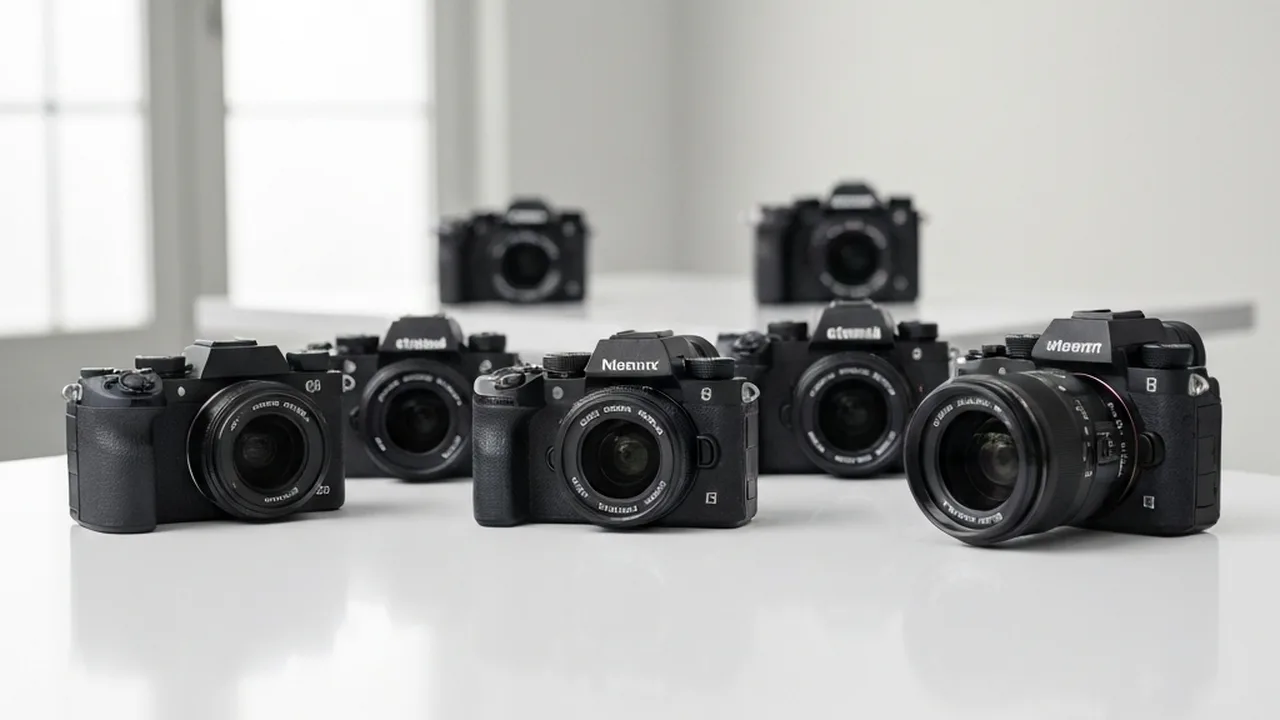
The Sony A7S III shoots 4K 120fps internally with virtually no recording limit — and it still costs under $3,500 in 2026. If you’re shopping for the best mirrorless camera for video, that single spec tells you how far the market has come. But raw resolution isn’t everything: rolling shutter, autofocus tracking, codec options, and heat management matter just as much when the red light is on.
Auf einen Blick: The Sony A7S III shoots 4K 120fps internally with virtually no recording limit — and it still costs under $3,500 in 2026. If you’re shopping for the best mirrorless camera for video, that…
I’ve tested and compared seven mirrorless cameras across real production scenarios — from solo YouTube setups to multi-camera documentary shoots — to find which ones actually deliver when it counts.
✅ Best overall: Sony A7S III — 4K120, 12.1MP low-light monster
✅ Best value: Panasonic Lumix S5 IIX — internal 6K, phase-detect AF
✅ Best 8K: Canon EOS R5 Mark II — 8K60 RAW internal
✅ Best for beginners: Sony ZV-E10 II — lightweight, affordable, great AF
📐 Key specs to compare: resolution, frame rates, codec support, IBIS, autofocus, recording limits
Contents
- 1 What Makes a Great Video Mirrorless Camera?
- 2 Best Mirrorless Cameras for Video: The Top 7
- 2.1 1. Sony A7S III — Best Overall for Video
- 2.2 2. Canon EOS R5 Mark II — Best for 8K and Hybrid Shooting
- 2.3 3. Panasonic Lumix S5 IIX — Best Value
- 2.4 4. Sony A7 IV — Best Hybrid Under $2,500
- 2.5 5. Fujifilm X-H2S — Best APS-C for Video
- 2.6 6. Sony ZV-E10 II — Best for Beginners
- 2.7 7. Blackmagic Cinema Camera 6K — Best for Colorists
- 3 Comparison Table: All 7 Cameras at a Glance
- 4 How to Choose: Matching Camera to Use Case
- 5 Essential Accessories for Video Shooting
- 6 4K vs 6K vs 8K: How Much Resolution Do You Actually Need?
- 7 Common Mistakes When Buying a Video Camera
- 8 Frequently Asked Questions
- 9 Final Verdict
What Makes a Great Video Mirrorless Camera?
Not every mirrorless camera that shoots 4K qualifies as a serious video tool. The gap between “shoots video” and “built for video” is enormous. Here’s what separates the two:
Resolution and frame rates set your ceiling. 4K at 60fps is the baseline for professional work in 2026. Anything less limits your slow-motion options and future-proofs nothing. 4K120 gives you buttery 5x slow motion. 8K is niche but valuable for reframing in post.
Codec and bit depth determine how much you can push footage in color grading. 10-bit 4:2:2 internal recording is the minimum for serious work. Some cameras now shoot ProRes or RAW internally, eliminating the need for external recorders entirely.
Autofocus reliability can make or break a one-person shoot. Phase-detect AF with eye tracking means you can work without a focus puller. Panasonic finally joined the phase-detect club with the S5 II series, closing the last major gap in their lineup.
In-body image stabilization (IBIS) matters for handheld work, gimbal-free run-and-gun, and vlogging. Sony’s Active Mode and Canon’s coordinated IS are game-changers for solo shooters.
Heat management and recording limits are the hidden killers. A camera that overheats after 20 minutes of 4K60 is useless for events and long interviews. Every camera on this list can record continuously for at least 60 minutes in its primary mode.
Best Mirrorless Cameras for Video: The Top 7
1. Sony A7S III — Best Overall for Video
The A7S III remains the gold standard for dedicated video shooters. Its 12.1MP sensor is deliberately low-resolution — and that’s the point. Larger photosites mean exceptional low-light performance (native ISO range up to 102,400) and minimal rolling shutter.
You get 4K120p with full-pixel readout, 16-bit RAW output via HDMI, and Sony’s S-Cinetone color science baked in. The dual CFexpress Type A / SD card slots handle high-bitrate recording without stuttering. Autofocus is fast and reliable, using 759 phase-detect points with real-time eye tracking that works in video mode.
The flipside? 12.1MP stills won’t satisfy hybrid shooters who also need high-resolution photos. And the body alone runs around $3,500 — before you add lenses.
Best for: Documentary, events, low-light, professional video production
Key specs: 4K120p, 12.1MP, 10-bit 4:2:2, dual card slots, 5-axis IBIS
2. Canon EOS R5 Mark II — Best for 8K and Hybrid Shooting
Canon completely redesigned the R5 for its second generation. The original R5 was infamous for overheating during 8K recording. The Mark II fixes this with a new heat dissipation system and a dedicated video processing engine.
8K 60fps RAW internal recording is the headline spec, but the 4K modes are equally impressive: oversampled from 8K, they produce stunningly detailed footage. You also get 4K120p in crop mode and Canon Log 3 for maximum dynamic range.
The 45MP sensor makes this a true hybrid — it’s as capable for stills as it is for video. Canon’s Dual Pixel CMOS AF II with eye/animal/vehicle tracking is arguably the most reliable autofocus system on the market.
Best for: Hybrid photo/video, 8K production, commercial work
Key specs: 8K60 RAW, 4K120 (crop), 45MP, Dual Pixel AF II, 5-axis IBIS
3. Panasonic Lumix S5 IIX — Best Value
Panasonic’s reputation for video is legendary (the GH series pioneered mirrorless video), and the S5 IIX delivers their best full-frame value yet. The “X” variant adds internal 6K recording, SSD recording via USB-C, and a full suite of pro video features missing from the standard S5 II.
Phase-detect autofocus — finally — makes the S5 IIX competitive with Sony and Canon for the first time. It’s not quite as fast for erratic subjects, but for interviews, narrative work, and planned shots, it’s more than adequate.
At around $1,700 body-only, it undercuts the competition significantly. You get 4K60 10-bit, V-Log/V-Gamut, open gate recording, and anamorphic desqueeze support — features that cost twice as much elsewhere.
Best for: Budget filmmakers, indie production, colorists who love V-Log
Key specs: 6K30, 4K60 10-bit, 24.2MP, phase-detect AF, SSD recording
4. Sony A7 IV — Best Hybrid Under $2,500
The A7 IV isn’t a dedicated video camera, but it’s one of the most capable hybrids available. The 33MP sensor delivers outstanding stills, while video specs include 4K60 in Super 35 crop and 4K30 with full-width readout from the entire sensor.
What makes it special for video is Sony’s ecosystem. Every E-mount lens works, autofocus is the same 759-point system from the A7S III, and you get 10-bit 4:2:2 with S-Log3 and S-Cinetone. For YouTubers and content creators who need both great photos and solid video, it hits the sweet spot.
The limitation is 4K60 requires a 1.5x crop, and there’s no 4K120. If high frame rates matter, step up to the A7S III.
Best for: Content creators, YouTube, hybrid photo/video
Key specs: 4K60 (crop), 4K30 full-width, 33MP, 10-bit 4:2:2, 5-axis IBIS
5. Fujifilm X-H2S — Best APS-C for Video
Fujifilm’s X-H2S proves that APS-C sensors can compete with full-frame for video. Its stacked BSI sensor delivers dramatically reduced rolling shutter — critical for fast pans and action footage.
The camera shoots 6.2K 30fps and 4K120p internally, with Apple ProRes and ProRes RAW support via HDMI. Fujifilm’s color science — including their beloved film simulations like Eterna — gives footage a distinctive look straight out of camera.
The APS-C advantage: smaller, lighter lenses that cost less. A complete Fujifilm video kit costs 30-40% less than an equivalent full-frame setup. The trade-off is a stop less low-light performance, which matters less if you control your lighting.
Best for: Run-and-gun, travel video, filmmakers who value color science
Key specs: 6.2K30, 4K120, 26.1MP, ProRes support, 7-stop IBIS
6. Sony ZV-E10 II — Best for Beginners
Sony designed the ZV-E10 II specifically for content creators, and it shows. The fully articulating screen, built-in directional microphone, and one-touch bokeh button are features that matter more on a daily vlog than 8K RAW ever will.
Don’t let the beginner-friendly design fool you — the specs are serious. You get 4K60 with full-pixel readout, 10-bit 4:2:2, and the same AI-powered autofocus system found in cameras costing three times as much. S-Cinetone is included for cinematic color.
At under $1,000 body-only, it’s the most affordable way into Sony’s ecosystem. The APS-C sensor means smaller lenses, and Sony’s E-mount compatibility gives you a massive selection to grow into.
Best for: Vloggers, YouTube beginners, content creators on a budget
Key specs: 4K60, 26MP, 10-bit 4:2:2, AI autofocus, articulating screen
7. Blackmagic Cinema Camera 6K — Best for Colorists
Blackmagic takes a different approach entirely. The Cinema Camera 6K is built exclusively for video — no photo mode, no hybrid compromises. What you get instead is Blackmagic RAW and ProRes recording in a body that includes a full copy of DaVinci Resolve Studio (worth $295 separately).
The full-frame 6K sensor captures 13 stops of dynamic range, and the built-in 5″ HDR touchscreen lets you monitor and color-grade on set. CFexpress storage handles the heavy data rates without external drives.
The trade-off: no autofocus (manual focus only), no IBIS, and the ergonomics are more “cine camera” than “mirrorless.” You need to know how to pull focus and stabilize your shots. For narrative filmmakers and colorists, that’s a feature, not a bug.
Best for: Narrative filmmaking, color-heavy work, DaVinci Resolve users
Key specs: 6K full-frame, BRAW + ProRes, 13 stops DR, 5″ HDR screen, DaVinci Resolve included
Comparison Table: All 7 Cameras at a Glance
| Camera | Max Resolution | Max FPS (4K) | Sensor | AF Type | IBIS | Price (Body) |
|---|---|---|---|---|---|---|
| Sony A7S III | 4K | 120fps | FF 12.1MP | Phase-detect | ✅ | ~$3,500 |
| Canon R5 Mark II | 8K | 60fps (8K) / 120fps (4K crop) | FF 45MP | Dual Pixel II | ✅ | ~$4,300 |
| Panasonic S5 IIX | 6K | 60fps | FF 24.2MP | Phase-detect | ✅ | ~$1,700 |
| Sony A7 IV | 4K | 60fps (crop) | FF 33MP | Phase-detect | ✅ | ~$2,500 |
| Fujifilm X-H2S | 6.2K | 120fps | APS-C 26.1MP | Phase-detect | ✅ | ~$2,500 |
| Sony ZV-E10 II | 4K | 60fps | APS-C 26MP | Phase-detect | ❌ | ~$900 |
| Blackmagic 6K | 6K | 36fps | FF | Manual only | ❌ | ~$2,600 |
How to Choose: Matching Camera to Use Case
The “best” camera depends entirely on what you’re shooting. Here’s a decision framework based on real production needs:
Solo YouTube / vlogging: Autofocus is king. You can’t check focus while you’re on camera. The Sony ZV-E10 II or a beginner-friendly camera with reliable eye-tracking AF is non-negotiable. Articulating screens and built-in mics save you from buying accessories.
Documentary / events: Low light and recording limits matter most. The Sony A7S III’s combination of ISO performance and unlimited recording makes it the safest choice. Dual card slots provide backup recording — essential when you can’t reshoot.
Commercial / narrative: Color science and dynamic range take priority. The Blackmagic 6K or Canon R5 II give you the most flexibility in post. If you have a focus puller, the Blackmagic’s manual-focus-only design isn’t a limitation.
Hybrid photo + video: The Sony A7 IV and Canon R6 II hit the sweet spot. Both deliver excellent stills and competent video without compromising either.
Essential Accessories for Video Shooting
The camera body is only part of the equation. Budget for these accessories — they’ll improve your footage more than any camera upgrade:
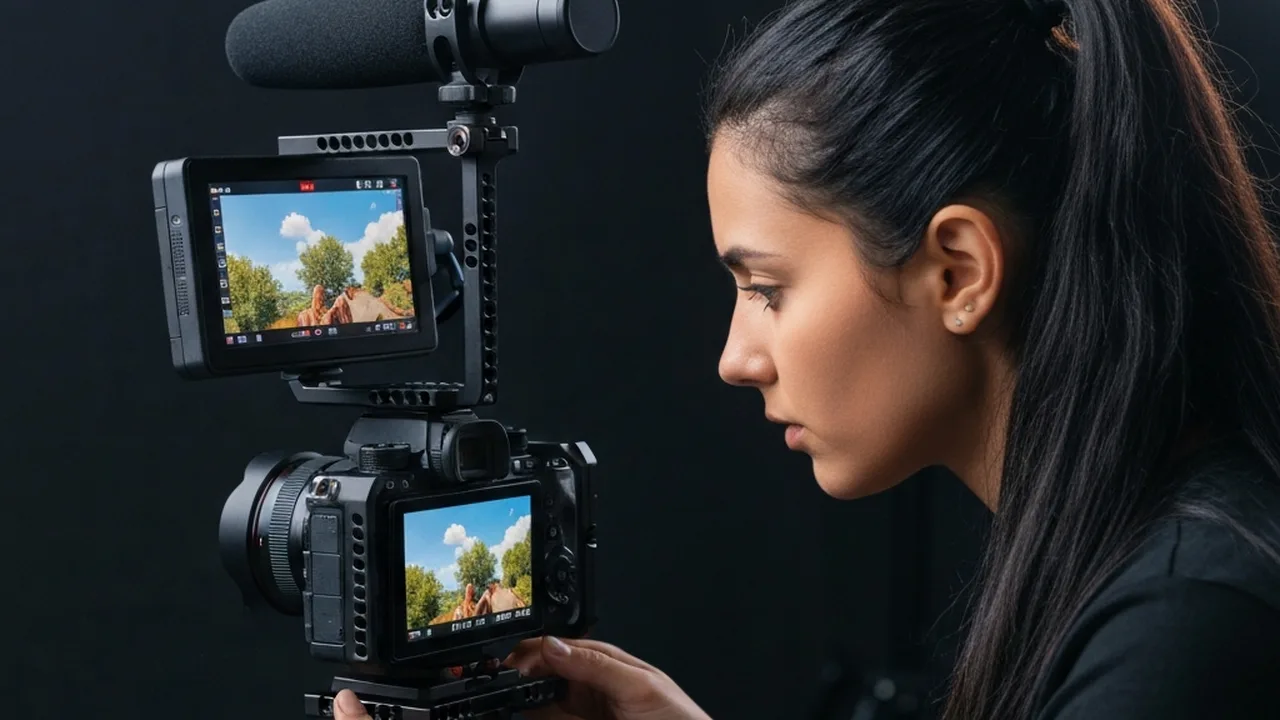
External audio: Built-in microphones are usable only for casual content. A shotgun mic (Rode VideoMic NTG, ~$250) or wireless lav system (DJI Mic 2, ~$350) transforms audio quality instantly. Bad audio makes viewers click away faster than bad video.
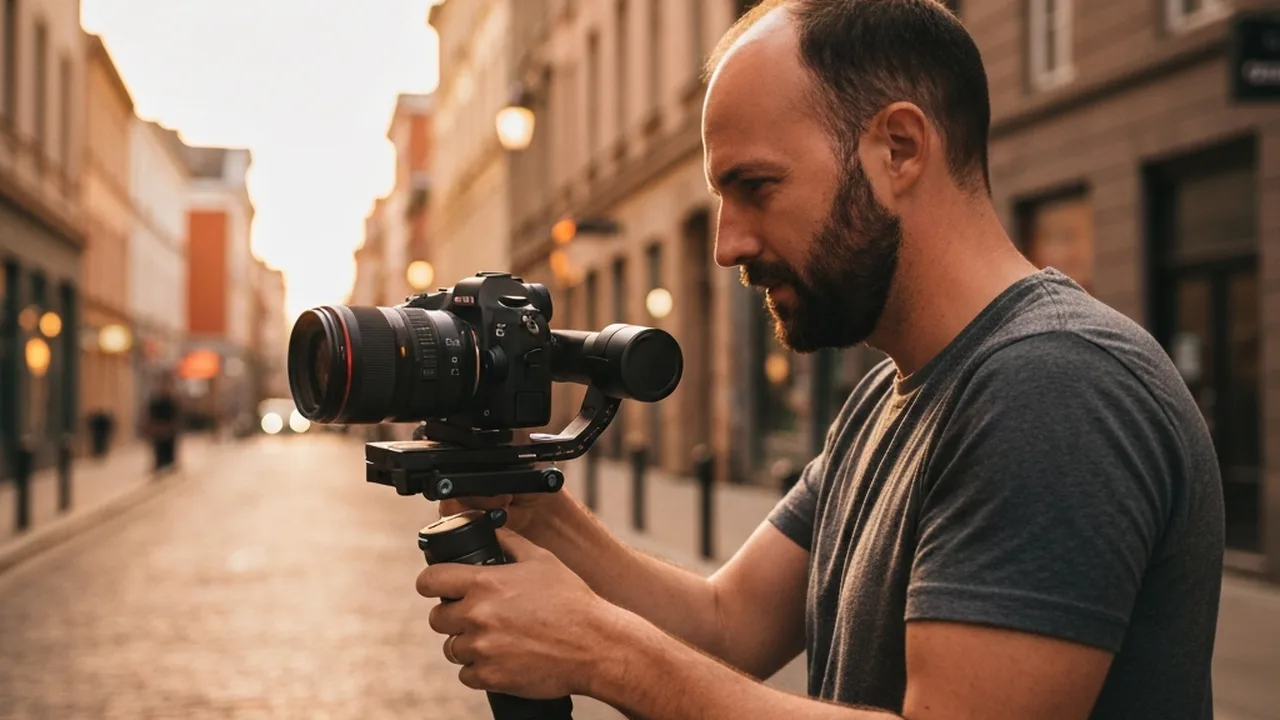
Stabilization: A solid tripod for static shots and a gimbal (DJI RS 4, ~$500) for movement. IBIS helps but doesn’t replace proper stabilization for cinematic motion.
Storage: 4K60 10-bit footage eats storage fast. Budget 256GB+ CFexpress or V60-rated SD cards for shooting, and at least 2TB of fast external storage for archiving. ND filters are equally essential — they let you maintain cinematic shutter speeds (1/50 at 24fps) in bright conditions.
Monitor: The built-in LCD works, but an external 5″ monitor (Atomos Shinobi, ~$400) gives you accurate focus peaking, waveforms, and false color in a size you can actually evaluate.
4K vs 6K vs 8K: How Much Resolution Do You Actually Need?
4K (3840 × 2160) is the delivery standard. YouTube, social media, and most broadcast content maxes out at 4K. If you’re delivering at 4K, shooting at 4K is perfectly fine — as long as your camera does it well (full-pixel readout, minimal crop).
6K (6144 × 3456) gives you meaningful reframing room. You can punch in 50% and still deliver clean 4K. For interviews where you want a two-angle look from a single camera, this is genuinely useful. The Panasonic S5 IIX and Fujifilm X-H2S both offer this at very reasonable prices.
8K (7680 × 4320) is overkill for most creators — but not all. Commercial shoots that need to crop aggressively, VFX work requiring clean detail extraction, and future-proofing for large-format displays are legitimate reasons to shoot 8K. The Canon R5 Mark II is the most accessible 8K option currently available.
The practical advice: shoot one step above your delivery format. If you deliver 4K, shooting 6K gives you flexibility. If you deliver 1080p (still common for social), 4K is plenty.
Common Mistakes When Buying a Video Camera
Chasing resolution over everything else. A camera that shoots mediocre 8K is worse than one that shoots excellent 4K. Bit depth, color science, and rolling shutter matter more than pixel count for video quality.
Ignoring the lens investment. Your camera body will be outdated in 3-4 years. Quality lenses last 15-20 years. Budget 60% of your total spend on glass. A $2,000 camera with a $500 kit lens will produce worse video than a $1,000 camera with a $1,500 prime.
Forgetting about audio. Viewers forgive slightly soft video. They don’t forgive echo-chamber audio, wind noise, or low-level hiss. An external microphone should be your first accessory purchase.
Buying for specs you’ll never use. If you’re making YouTube videos and Instagram Reels, you don’t need 8K RAW. Match the tool to the job, not to the spec sheet.
Overlooking ergonomics. You’ll hold this camera for hours. Weight, grip comfort, button placement, and menu navigation matter more than you think during a 10-hour shoot day. Visit a camera store and hold the body before buying.
Frequently Asked Questions
Final Verdict
For most videographers, the Sony A7S III remains the best overall mirrorless camera for video — its combination of low-light performance, 4K120, and reliability in the field is unmatched. But “best” depends on your budget and use case:
Choose the Panasonic S5 IIX if budget matters — you get 90% of the video capability at half the price. Pick the Canon R5 Mark II if you need 8K or split time equally between stills and video. Go with the Sony ZV-E10 II if you’re starting out and want the easiest path to great-looking footage.
The right camera is the one that matches your actual shooting style, not the one with the longest spec sheet. Every camera on this list can produce professional results — the difference is in how they get there.
Find the perfect gear for your photography and video needs.
Explore More Photography Guides
Find the perfect gear and techniques for your next shoot.